Europe · Mediterranean
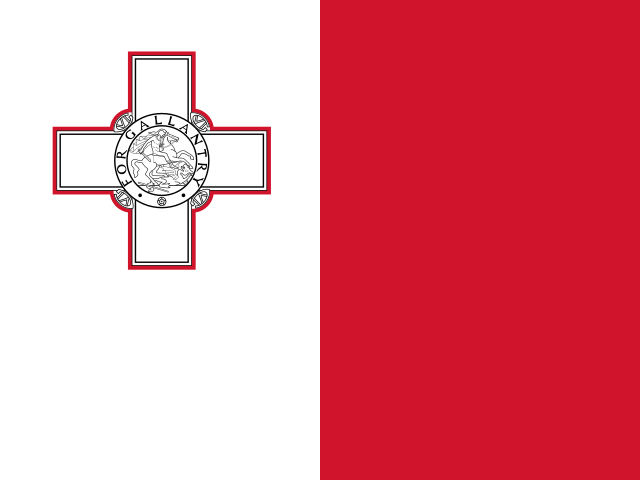 Malta
Malta suits remote workers who want an easy landing in Europe: English is an official language, the weather is sunny, it is in the EU, and the Nomad Residence Permit is well established. The limits come from its size. The island is very small and can feel repetitive after a few months, housing is expensive because demand is high, and construction, noise and traffic are constant. Summer brings heat and crowds to the few beaches. Spring and autumn are the best seasons.
Nomad quick facts
$2160/mo
$3460/mo
209.2 Mbps
1.60 (#26 of 190)
Limited
Apr–Jun, Sep–Oct
Available
78.4 / 100
Score breakdown
English is an official language, sunny weather, EU location with easy flights, established nomad permit.
Very small island, expensive housing, constant construction and traffic, crowded in summer.
Cost of living in Malta
Malta offers a convenient Mediterranean base with English widely used in everyday life, but its small size and high demand keep housing costs elevated. Valletta and the most popular coastal areas tend to command the highest rents, while inland towns can provide better value for longer stays. Food and local transport can remain manageable, making accommodation the main expense to watch.
Estimated monthly cost
Single
$2,160/mo
Couple
$3,460/mo
Cost score inputs
Livingcost
65/100
WB PLI
69
Score blends a nomad-realistic monthly cost estimate (built from livingcost.org data, adjusted for short-term nomad spending like furnished housing, coworking, and eating out) with the World Bank's Household Consumption Price Level Index, a broader cross-country cost benchmark. Countries without World Bank price-level data are scored on the livingcost estimate alone. Prices displayed in USD.
The nomad cost estimate reflects a realistic single/couple monthly budget, not a bare local cost of living — actual spending still varies with lifestyle and location within a country.
Sources: livingcost.org · World Bank Household Consumption Price Level Index · Independent nomad cost estimates
Internet in Malta
Malta boasts island-wide high-speed fiber infrastructure, pairing fast downloads with strong upload performance and low latency for remote workers.
Download speed
209.2 Mbps
Upload speed
50.7 Mbps
Latency
42.9 ms
Blends download speed (Ookla Speedtest Global Index) with upload speed and latency (Cloudflare Radar). Speeds are scored between 10 Mbps (0) and 200 Mbps (100); latency counts the opposite way — lower is better. A missing metric doesn't penalize a country, it's scored on whatever data is available.
A national average — city and neighbourhood speeds vary, especially outside major hubs.
Get an eSIM for arrival →Sources: Ookla Speedtest Global Index · Cloudflare Radar
Safety in Malta
Malta is generally safe, with petty theft and occasional nightlife-related incidents the main concerns; the dense urban areas around Valletta and St. Julian's warrant the most basic caution.
Global safety rank
#26 of 190
Estimated safety score
1.60 (lower = safer; not covered by the Global Peace Index)
WJP Rule of Law rank
#12 of 143
WJP Rule of Law score
0.91 (higher = safer)
Gallup Law & Order rank
#36 of 119
Gallup Law & Order score
83 (higher = safer)
Blends three published safety indices: the Global Peace Index, the WJP Rule of Law Index (Order & Security factor), and the Gallup Global Law and Order Index. Places the Global Peace Index doesn't cover use our own estimate, based on regional peers and crime data. Each is rescaled 0-100 and combined with weights favoring GPI and Gallup slightly over WJP. Not every country is tracked by all three — the blend adjusts to whichever are available (weights are renormalized) rather than penalizing a country for a missing source, though a country tracked by fewer sources carries lower confidence.
As this is national average data, be aware that safety varies significantly by city and region within a country.
Get nomad insurance →Sources: Global Peace Index (Institute for Economics & Peace) · WJP Rule of Law Index (World Justice Project) · Gallup Global Law and Order Index
Tourism & infrastructure in Malta
Sliema and St. Julian's offer a compact, English-speaking, seafront nomad base with easy access to the rest of Europe by flight. The island itself is genuinely small, so day-trip variety within Malta is limited — Gozo is the main escape once the main island starts to feel repetitive.
Happiness rank
#43 of 147
Quality of life rank
#53 of 89
Tourism development rank
#33 of 119
Within-city transit
Limited
Between-city transit
Moderate
Mediterranean; hot, dry summers and mild, wet winters, very sunny.
Best months: Apr–Jun, Sep–Oct
Malta has no railway or metro; the islands rely on a single bus network (Malta Public Transport), free for residents and reaching most towns but prone to delays and congestion. Ferries link Valletta, Sliema and Gozo. Distances are short and the historic towns very walkable, though many residents still drive.
A weighted blend of published indices: the World Economic Forum's Travel & Tourism Development Index (weighted highest — the strongest predictor of appeal), Numbeo's Quality of Life Index, the World Happiness Report, Gallup's day-to-day enjoyment data, the EF English Proficiency Index, and a public transit assessment covering both within-city and between-city transport. Not every country is scored on all six — the blend adjusts to whichever are available rather than penalizing a country for a missing one.
Sources: WEF Travel & Tourism Development Index · Numbeo Quality of Life Index · World Happiness Report · Gallup · EF English Proficiency Index · Public transit assessment
Malta digital nomad visa and entry rules
Tourist entry — USA passport
Visa-free — 90 days
Tourism Visa Note
Part of the Schengen Area — max 90 days within any rolling 180-day period across ALL Schengen countries combined, not per country. Land border crossings often go unstamped, so track your own dates.
Working remotely in Malta on tourist entry
Visitors may work remotely for an employer abroad without a work visa, provided they entered lawfully and no costs are recharged to a Maltese entity, according to EY's July 2026 guide. Source
In practice
The EU Entry/Exit System now logs every entry and exit digitally. It flagged nearly 7,000 overstayers in its first six months, according to press reports from May 2026. Source
Staying longer
EU visa-waiver guidance provides no extension of the 90 days. A longer stay requires a national long-stay visa or residence permit. Source
Border runs and re-entry
A border run does not reset the allowance: time in every Schengen country counts toward the same total. Source
For a longer stay with explicit permission, see the Malta Nomad Residence Permit (NRP) below.
Visa and entry requirements can change. Check the latest information from official government sources before travelling; eligibility, documents and permitted activities depend on your nationality and personal circumstances.
Tax & residency in Malta
Tax-residency timing
More than 183 days in a calendar year; residence may begin on arrival to establish residence
How the day count works
More than 183 days in a calendar year is a statutory indicator; a person who comes to establish residence may be resident from arrival, and ordinary residence can arise from a pattern of presence and ties over time.
Other residency triggers
Coming to Malta to establish residence or living there permanently or indefinitely can establish residence independently of the 183-day test; domicile and personal/economic ties also matter.
Remote work before residence
May be taxable. Work performed in Malta can be Malta-source and taxed before residence; treaty relief for employment generally depends on presence, foreign employer and whether the pay is borne by a Maltese permanent establishment.
If you become tax resident
Individuals domiciled and ordinarily resident are generally taxed on worldwide income; those not domiciled or not ordinarily resident generally use a remittance basis, with Malta-source income taxable and foreign income generally taxable when remitted.
What this usually means for nomads
More than 183 days in a calendar year, or moving to Malta to establish residence, can make a person resident. Pay for work performed in Malta may be taxable before residence, although a treaty may provide relief for qualifying foreign employment. Malta ties, a permanent move and bringing foreign income into Malta can affect the result.
Tax rules can change and depend on your residency status, income structure, time spent in the country and applicable tax treaties. This information is general only and is not financial or tax advice. Consult a qualified tax professional before relying on it.
Top cities for nomads in Malta
Sliema is the main nomad base, with seafront living, cafés and coworking. St. Julian's next door is the nightlife district, and Valletta is historic and quieter. Gozo, the smaller sister island, is the escape when the main island feels cramped.
Main nomad hub; modern seafront living, cafes, coworking, walkable.
Nightlife & social scene; next to Paceville; busy & party-oriented.
Capital; stunning historic architecture, but small, quiet & pricier.
Laid-back sister island; rural, diving & nature, slower pace.
 Finland
 Sweden
 Belgium