South America · Caribbean
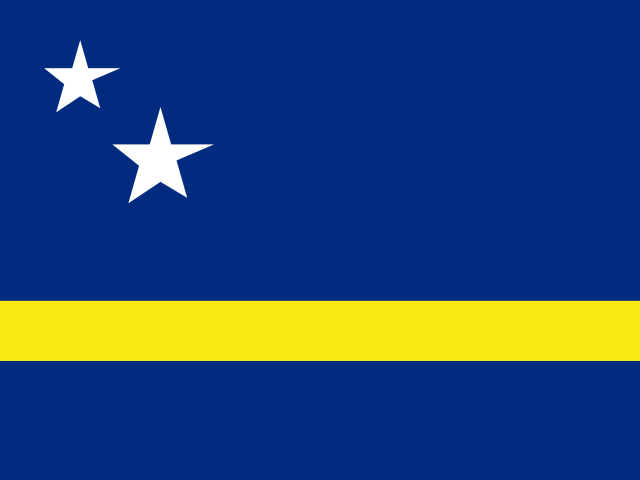 Curaçao
's real advantage is its position outside the hurricane belt, which removes the storm-season risk that affects most Caribbean bases. Its remote-work permit welcomes nomads, although only for about a year in total. Dutch, English, Spanish and Papiamentu are all widely spoken. Set expectations on the landscape: this is a dry, windy island, not a lush tropical one. Imported goods are expensive, the expat community is small, and a car is useful, since public transport is limited. Internet is steady enough for everyday remote work.
Nomad quick facts
$2070/mo
$3310/mo
71.7 Mbps
1.75 (#54 of 190)
Limited
Year-round
Available
71.2 / 100
Score breakdown
Outside the hurricane belt, remote-work permit, several languages widely spoken, beaches and diving.
Remote-work permit limited to about a year, expensive imported goods, small expat community, limited public transport.
Cost of living in Curaçao
Curaçao is relatively affordable for a Caribbean island, although imported goods make groceries and some consumer products more expensive. Willemstad has the broadest selection of accommodation and services, while longer-term rentals can offer better value than short-term tourist accommodation. A car is useful for exploring the island, adding to the cost of a longer stay.
Estimated monthly cost
Single
$2,070/mo
Couple
$3,310/mo
Cost score inputs
Livingcost
66/100
WB PLI
78.7
Score blends a nomad-realistic monthly cost estimate (built from livingcost.org data, adjusted for short-term nomad spending like furnished housing, coworking, and eating out) with the World Bank's Household Consumption Price Level Index, a broader cross-country cost benchmark. Countries without World Bank price-level data are scored on the livingcost estimate alone. Prices displayed in USD.
The nomad cost estimate reflects a realistic single/couple monthly budget, not a bare local cost of living — actual spending still varies with lifestyle and location within a country.
Sources: livingcost.org · World Bank Household Consumption Price Level Index · Independent nomad cost estimates
Internet in Curaçao
Curaçao supplies steady island broadband suitable for everyday remote tasks, though international latency is higher than in mainland hubs.
Download speed
71.7 Mbps
Upload speed
36.7 Mbps
Latency
58.7 ms
Blends download speed (Ookla Speedtest Global Index) with upload speed and latency (Cloudflare Radar). Speeds are scored between 10 Mbps (0) and 200 Mbps (100); latency counts the opposite way — lower is better. A missing metric doesn't penalize a country, it's scored on whatever data is available.
A national average — city and neighbourhood speeds vary, especially outside major hubs.
Get an eSIM for arrival →Sources: Ookla Speedtest Global Index · Cloudflare Radar
Safety in Curaçao
Curaçao is generally safe for nomads, with most visitors experiencing nothing worse than opportunistic theft; exercise normal caution in Willemstad's Punda and Otrobanda districts after dark, while resort areas like Jan Thiel and Pietermaai are calmer.
Global safety rank
#54 of 190
Estimated safety score
1.75 (lower = safer; not covered by the Global Peace Index)
Blends three published safety indices: the Global Peace Index, the WJP Rule of Law Index (Order & Security factor), and the Gallup Global Law and Order Index. Places the Global Peace Index doesn't cover use our own estimate, based on regional peers and crime data. Each is rescaled 0-100 and combined with weights favoring GPI and Gallup slightly over WJP. Not every country is tracked by all three — the blend adjusts to whichever are available (weights are renormalized) rather than penalizing a country for a missing source, though a country tracked by fewer sources carries lower confidence.
As this is national average data, be aware that safety varies significantly by city and region within a country.
Get nomad insurance →Sources: Global Peace Index (Institute for Economics & Peace) · WJP Rule of Law Index (World Justice Project) · Gallup Global Law and Order Index
Tourism & infrastructure in Curaçao
Willemstad's UNESCO-listed, candy-colored Dutch architecture gives Curaçao real character, backed by an unusual perk: it sits outside the hurricane belt, sparing nomads the storm-season anxiety common elsewhere in the Caribbean. It's an arid, desert-like island rather than lush tropical, so day-trip variety leans toward beaches and diving rather than rainforest or nature hikes.
Within-city transit
Limited
Between-city transit
Limited
Tropical semi-arid; warm, sunny and dry year-round, cooled by trade winds and outside the main hurricane belt.
Best months: Year-round
Curaçao has a basic public bus system — large government Konvoi buses on main routes plus privately run minibuses — which is cheap but infrequent and informal. Most visitors rent a car to reach beaches and the countryside. Willemstad, the UNESCO-listed capital, is compact and walkable.
A weighted blend of published indices: the World Economic Forum's Travel & Tourism Development Index (weighted highest — the strongest predictor of appeal), Numbeo's Quality of Life Index, the World Happiness Report, Gallup's day-to-day enjoyment data, the EF English Proficiency Index, and a public transit assessment covering both within-city and between-city transport. Not every country is scored on all six — the blend adjusts to whichever are available rather than penalizing a country for a missing one.
Sources: WEF Travel & Tourism Development Index · Numbeo Quality of Life Index · World Happiness Report · Gallup · EF English Proficiency Index · Public transit assessment
Curaçao digital nomad visa and entry rules
Tourist entry — USA passport
Visa-free — 90 days
Tourism Visa Note
Even though visa-free, every visitor must complete the free Digital Immigration (DI) Card online before travel (not the same system as Aruba's ED Card, despite the similar concept) — covers passport, flight, and accommodation details. Dutch and US passport holders may qualify for a longer 180-day stay per calendar year rather than the standard 90.
Working remotely in Curaçao on tourist entry
Work of any kind, including remote work, is permitted only with a standard work visa or the digital nomad visa, according to EY's July 2026 global guide. Source
In practice
No reports of enforcement against remote workers found (checked October 2026).
Staying longer
An extension can be requested at immigration with proof of travel insurance covering the longer stay. Source
Border runs and re-entry
The allowance is counted per calendar year, so a border run does not reset it. Source
For a longer stay with explicit permission, see the @HOME in Curaçao below.
Other long-stay options
Offer a specific visa for "hibernators" (snowbirds) and "investors." The investor visa allows for a temporary stay that can lead to permanent residency, depending on the amount invested in the local economy.
Visa and entry requirements can change. Check the latest information from official government sources before travelling; eligibility, documents and permitted activities depend on your nationality and personal circumstances.
Tax & residency in Curaçao
Tax-residency timing
No fixed day threshold identified; residence depends on whether the person is considered to live in Curaçao
How the day count works
No single statutory day-count test identified in the reviewed guidance; residence is assessed from the person’s actual living circumstances.
Other residency triggers
Living in Curaçao and the person’s household, home, and personal and economic ties may inform residence; facts and circumstances matter.
Remote work before residence
May be taxable. Nonresidents pay Curaçao income tax on income received from Curaçao; locally performed employment or service work may be Curaçao-source, depending on its legal classification.
If you become tax resident
Residents are taxed on worldwide income; nonresidents are taxed on Curaçao-source income, subject to applicable rules and treaty relief.
What this usually means for nomads
A short temporary stay is less likely to establish residence, but Curaçao does not rely on a single day threshold and looks at whether you live there. Nonresidents may still be taxed on Curaçao-source work income. A local home, household ties, longer stay or work arrangement can raise the risk.
Tax rules can change and depend on your residency status, income structure, time spent in the country and applicable tax treaties. This information is general only and is not financial or tax advice. Consult a qualified tax professional before relying on it.
Top cities for nomads in Curaçao
Willemstad, with its colourful UNESCO-listed centre, has most of the services and coworking. Pietermaai is its restored, lively district and a nomad favourite, Jan Thiel is an upscale beach area, and Westpunt is remote, with the best beaches and diving.
Capital & largest; colorful UNESCO center, most amenities, cafes & coworking.
Trendy restored district in Willemstad; boutique hotels, bars, nomad favorite.
Upscale beach area; resorts, dining, calm expat enclave.
Rugged west end; best beaches & diving, quiet & remote.
 Germany
 Barbados
 Saint Kitts and Nevis