Europe · S. Europe
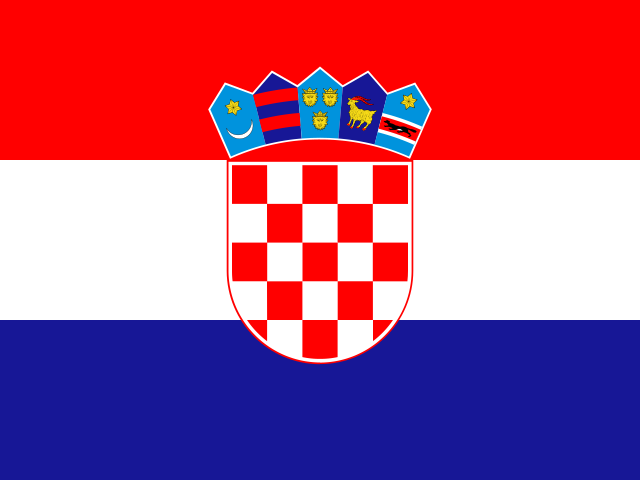 Croatia
 was early to offer a digital nomad stay, and qualifying foreign income earned under it is exempt from Croatian income tax. The coast is the draw and also the problem: in July and August the Dalmatian towns fill with cruise crowds and prices jump, and in winter many coastal places half close. Timing therefore matters more than the national cost figures suggest. May, September and October bring warm water without the crush, and accommodation is much better value outside summer. Internet can be unreliable on the islands.
Nomad quick facts
$1760/mo
$2820/mo
121.0 Mbps
1.619 (#31 of 190)
Moderate
May–Sep
Available
78.4 / 100
Score breakdown
Adriatic coastline and islands, good food, tax exemption under the nomad stay, good value outside summer.
Crowded and expensive coast in summer, many coastal towns quiet in winter, unreliable internet on islands.
Cost of living in Croatia
Croatia can be good value outside the summer tourist season, when accommodation prices in coastal destinations fall substantially. Dubrovnik and Split are among the more expensive options, while Zagreb and smaller inland or coastal cities offer a more manageable year-round base. For nomads, timing and location make a bigger difference to costs than Croatia's national average suggests.
Estimated monthly cost
Single
$1,760/mo
Couple
$2,820/mo
Cost score inputs
Livingcost
73/100
WB PLI
58.8
Score blends a nomad-realistic monthly cost estimate (built from livingcost.org data, adjusted for short-term nomad spending like furnished housing, coworking, and eating out) with the World Bank's Household Consumption Price Level Index, a broader cross-country cost benchmark. Countries without World Bank price-level data are scored on the livingcost estimate alone. Prices displayed in USD.
The nomad cost estimate reflects a realistic single/couple monthly budget, not a bare local cost of living — actual spending still varies with lifestyle and location within a country.
Sources: livingcost.org · World Bank Household Consumption Price Level Index · Independent nomad cost estimates
Internet in Croatia
Croatia features reliable baseline internet speeds for everyday tasks, though upload capacity and latency lag slightly behind top Western European benchmarks.
Download speed
121.0 Mbps
Upload speed
43.5 Mbps
Latency
47.6 ms
Blends download speed (Ookla Speedtest Global Index) with upload speed and latency (Cloudflare Radar). Speeds are scored between 10 Mbps (0) and 200 Mbps (100); latency counts the opposite way — lower is better. A missing metric doesn't penalize a country, it's scored on whatever data is available.
A national average — city and neighbourhood speeds vary, especially outside major hubs.
Get an eSIM for arrival →Sources: Ookla Speedtest Global Index · Cloudflare Radar
Safety in Croatia
Croatia is generally very safe for nomads, with relatively low crime and strong rule of law; normal precautions around tourist crowds are sufficient, particularly in busy summer destinations.
Global safety rank
#31 of 190
Peace Index score
1.619 (lower = safer)
WJP Rule of Law rank
#32 of 143
WJP Rule of Law score
0.84 (higher = safer)
Gallup Law & Order rank
#30 of 119
Gallup Law & Order score
85 (higher = safer)
Blends three published safety indices: the Global Peace Index, the WJP Rule of Law Index (Order & Security factor), and the Gallup Global Law and Order Index. Places the Global Peace Index doesn't cover use our own estimate, based on regional peers and crime data. Each is rescaled 0-100 and combined with weights favoring GPI and Gallup slightly over WJP. Not every country is tracked by all three — the blend adjusts to whichever are available (weights are renormalized) rather than penalizing a country for a missing source, though a country tracked by fewer sources carries lower confidence.
As this is national average data, be aware that safety varies significantly by city and region within a country.
Get nomad insurance →Sources: Global Peace Index (Institute for Economics & Peace) · WJP Rule of Law Index (World Justice Project) · Gallup Global Law and Order Index
Tourism & infrastructure in Croatia
Split and Zagreb offer distinct nomad bases — one coastal and lively, one inland and café-driven — with easy ferry access to quieter islands like Vis and Brač for weekend trips. Croatia's Adriatic coastline and national parks make it one of the stronger countries on this list for spontaneous getaways.
Happiness rank
#70 of 147
Quality of life rank
#22 of 89
Tourism development rank
#46 of 119
English Proficiency Index
617.0 (2 out of 106)
Within-city transit
Moderate
Between-city transit
Moderate
Mediterranean on the coast, continental inland; hot, dry summers and mild, wet coastal winters.
Best months: May–Sep
Croatia's transit is strongest in Zagreb, whose tram and bus network (ZET) is comprehensive and cheap. Coastal cities such as Split and Dubrovnik rely on buses. Intercity travel depends on an excellent long-distance bus network and Jadrolinija coastal ferries, as passenger rail is slow and limited. Old towns are pedestrianised and very walkable.
A weighted blend of published indices: the World Economic Forum's Travel & Tourism Development Index (weighted highest — the strongest predictor of appeal), Numbeo's Quality of Life Index, the World Happiness Report, Gallup's day-to-day enjoyment data, the EF English Proficiency Index, and a public transit assessment covering both within-city and between-city transport. Not every country is scored on all six — the blend adjusts to whichever are available rather than penalizing a country for a missing one.
Sources: WEF Travel & Tourism Development Index · Numbeo Quality of Life Index · World Happiness Report · Gallup · EF English Proficiency Index · Public transit assessment
Croatia digital nomad visa and entry rules
Tourist entry — USA passport
Visa-free — 90 days
Tourism Visa Note
Part of the Schengen Area — max 90 days within any rolling 180-day period across ALL Schengen countries combined, not per country. Land border crossings often go unstamped, so track your own dates.
Working remotely in Croatia on tourist entry
Visitors may work remotely for an employer abroad without a work visa, provided they entered lawfully and no costs are recharged to a Croatian entity, according to EY's July 2026 guide. Source
In practice
The EU Entry/Exit System now logs every entry and exit digitally. It flagged nearly 7,000 overstayers in its first six months, according to press reports from May 2026. Source
Staying longer
EU visa-waiver guidance provides no extension of the 90 days. A longer stay requires a national long-stay visa or residence permit. Source
Border runs and re-entry
A border run does not reset the allowance: time in every Schengen country counts toward the same total. Source
For a longer stay with explicit permission, see the Temporary Stay of Digital Nomads below.
Other long-stay options
No other popular options for remote workers.
Visa and entry requirements can change. Check the latest information from official government sources before travelling; eligibility, documents and permitted activities depend on your nationality and personal circumstances.
Tax & residency in Croatia
Tax-residency timing
183 days
How the day count works
A home continuously available for at least 183 days in one or two calendar years can establish domicile; habitual residence can arise from continuous or time-linked presence of at least 183 days in one or two calendar years. Short breaks of up to one year do not reset the latter test.
Other residency triggers
Home availability, family location, where a single person mainly stays or departs for work, personal and economic ties, and applicable treaty tie-breakers can matter.
Remote work before residence
May be taxable. Income qualifying under granted Croatian digital-nomad status is exempt, but other Croatian-source work income may still be taxable.
If you become tax resident
Croatian residents are generally taxed on domestic- and foreign-source income, subject to exemptions and tax treaties.
Visa-specific tax rule
Income from employment or activity for an employer not registered in Croatia, under granted digital-nomad status, is exempt from personal income tax.
What this usually means for nomads
A short stay below 183 days without a Croatian home is less likely to meet the residence tests, while a longer stay may. Income qualifying under granted Croatian digital-nomad status is exempt, but other Croatian-source work income may still be taxable. A Croatian home available for 183 days, qualifying presence or strong family and life ties increases residency risk.
Tax rules can change and depend on your residency status, income structure, time spent in the country and applicable tax treaties. This information is general only and is not financial or tax advice. Consult a qualified tax professional before relying on it.
Top cities for nomads in Croatia
Split is the better year-round coastal base, walkable and with a real coworking scene. Zagreb is cheaper, less touristy and lively through the off-season. Dubrovnik is the most crowded and expensive, and Vis and Brač are quieter islands than Hvar.
Coastal nomad hub; island access, lively old town, busy in summer.
Capital & largest; cafe culture, year-round city, cheaper; not coastal.
Smaller coastal city; lovely old town, island/Krka access, quiet off-season.
Famous UNESCO old town, but very high CoL & over-touristed; weaker long-stay base.
Croatia's 3rd city; working port, normal prices, quieter, less touristy.
Istria's hub; Roman Arena in old town, beaches, calmer than Split.


 Czechia
 Greece
 Barbados