South America
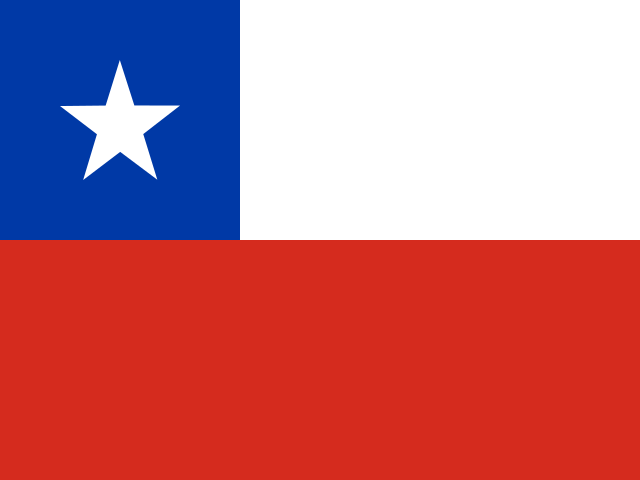 Chile
Chile is the most developed base in South America, with strong infrastructure, very fast internet and political stability. It costs more than its neighbours, and urban crime has risen, particularly theft and robbery in Santiago and Valparaíso, so choose neighbourhoods with care. There is no dedicated nomad visa. English is limited, and some Spanish goes a long way. Because the country is a very long, narrow strip, the right season depends on where you are: the north and Santiago are pleasant all year, while Patagonia is accessible mainly in the southern summer, from October to March. This is serious earthquake country.
Nomad quick facts
$1290/mo
$2060/mo
393.4 Mbps
1.826 (#71 of 190)
Strong
Oct–Mar
Not available
77.8 / 100
Score breakdown
Strong infrastructure in Santiago, very fast internet, varied landscapes from desert to Patagonia, political stability.
Pricier than neighbouring countries, rising urban crime, limited English, earthquake risk, no nomad visa.
Cost of living in Chile
Chile offers a relatively stable and developed base in Latin America, with everyday costs that are moderate by international standards but higher than in much of the region. Santiago has the broadest range of services and connectivity, though housing can be expensive in desirable neighborhoods. Smaller cities and coastal areas such as Viña del Mar can offer a different balance of lifestyle and cost, while local markets and restaurants help keep daily spending reasonable.
Estimated monthly cost
Single
$1,290/mo
Couple
$2,060/mo
Cost score inputs
Livingcost
83/100
WB PLI
51.2
Score blends a nomad-realistic monthly cost estimate (built from livingcost.org data, adjusted for short-term nomad spending like furnished housing, coworking, and eating out) with the World Bank's Household Consumption Price Level Index, a broader cross-country cost benchmark. Countries without World Bank price-level data are scored on the livingcost estimate alone. Prices displayed in USD.
The nomad cost estimate reflects a realistic single/couple monthly budget, not a bare local cost of living — actual spending still varies with lifestyle and location within a country.
Sources: livingcost.org · World Bank Household Consumption Price Level Index · Independent nomad cost estimates
Internet in Chile
Chile leads South America in internet performance, offering ultra-fast download speeds, high upload throughput, and dependable low-latency connections.
Download speed
393.4 Mbps
Upload speed
178.7 Mbps
Latency
28.1 ms
Blends download speed (Ookla Speedtest Global Index) with upload speed and latency (Cloudflare Radar). Speeds are scored between 10 Mbps (0) and 200 Mbps (100); latency counts the opposite way — lower is better. A missing metric doesn't penalize a country, it's scored on whatever data is available.
A national average — city and neighbourhood speeds vary, especially outside major hubs.
Get an eSIM for arrival →Sources: Ookla Speedtest Global Index · Cloudflare Radar
Safety in Chile
Chile is relatively safe by regional standards but has rising urban crime, particularly theft, robbery and carjacking; Santiago and Valparaíso require more caution, while demonstrations can disrupt transport.
Global safety rank
#71 of 190
Peace Index score
1.826 (lower = safer)
WJP Rule of Law rank
#98 of 143
WJP Rule of Law score
0.67 (higher = safer)
Gallup Law & Order rank
#93 of 119
Gallup Law & Order score
68 (higher = safer)
Blends three published safety indices: the Global Peace Index, the WJP Rule of Law Index (Order & Security factor), and the Gallup Global Law and Order Index. Places the Global Peace Index doesn't cover use our own estimate, based on regional peers and crime data. Each is rescaled 0-100 and combined with weights favoring GPI and Gallup slightly over WJP. Not every country is tracked by all three — the blend adjusts to whichever are available (weights are renormalized) rather than penalizing a country for a missing source, though a country tracked by fewer sources carries lower confidence.
As this is national average data, be aware that safety varies significantly by city and region within a country.
Get nomad insurance →Sources: Global Peace Index (Institute for Economics & Peace) · WJP Rule of Law Index (World Justice Project) · Gallup Global Law and Order Index
Tourism & infrastructure in Chile
Santiago offers the most developed infrastructure in South America, with the Andes as a backdrop and bohemian Valparaíso an easy day trip away. Chile's extreme north-south length means the Atacama Desert and Patagonia are both within the country, but reaching either from your base takes real travel time.
Happiness rank
#50 of 147
Quality of life rank
#72 of 89
Tourism development rank
#35 of 119
Within-city transit
Strong
Between-city transit
Moderate
Ranges from the arid Atacama north through a Mediterranean centre to cold, wet Patagonia; seasons reversed.
Best months: Oct–Mar
Chile's transit is led by Santiago's Metro, one of South America's largest and most modern, integrated with buses via the Bip! card. Other cities rely on buses and colectivos. Intercity travel is dominated by a comfortable, extensive long-distance bus network, with limited rail and domestic flights spanning the long country. Santiago is walkable and well-connected.
A weighted blend of published indices: the World Economic Forum's Travel & Tourism Development Index (weighted highest — the strongest predictor of appeal), Numbeo's Quality of Life Index, the World Happiness Report, Gallup's day-to-day enjoyment data, the EF English Proficiency Index, and a public transit assessment covering both within-city and between-city transport. Not every country is scored on all six — the blend adjusts to whichever are available rather than penalizing a country for a missing one.
Sources: WEF Travel & Tourism Development Index · Numbeo Quality of Life Index · World Happiness Report · Gallup · EF English Proficiency Index · Public transit assessment
Chile visa and entry rules for digital nomads
Tourist entry — USA passport
Visa-free — 90 days
Tourism Visa Note
Even though visa-free, you'll receive an entry record (tarjeta de turismo) at the border, on paper or digital — keep it, since hotels and customs may ask to see it later in your trip.
Working remotely in Chile on tourist entry
Work of any kind, including remote work, is permitted only with a standard work visa, according to EY's July 2026 global guide. Source
In practice
No reports of enforcement against remote workers found (checked October 2026).
Staying longer
A 90-day extension is requested online at least 30 days before the permit expires and costs about USD 100. Source
Border runs and re-entry
Leaving and re-entering usually gives visa-exempt nationals a new permit, though officers can refuse entry if they suspect a person is living in Chile. Source
Digital nomad visa
No dedicated digital-nomad route
Other long-stay options
Temporary Residence Permit, Permanent Residence Permit
Visa and entry requirements can change. Check the latest information from official government sources before travelling; eligibility, documents and permitted activities depend on your nationality and personal circumstances.
Tax & residency in Chile
Tax-residency timing
More than 183 days
How the day count works
More than 183 cumulative days in any 12-month period, consecutive or intermittent; residence may also arise from demonstrated intent to remain.
Other residency triggers
A demonstrated disposition or intention to remain in Chile can establish residence without waiting for the day-count threshold.
Remote work before residence
May be taxable. Fees for services carried out in Chile may be Chile-source before residence, even when paid abroad; treaty provisions and income type can affect the result.
If you become tax resident
Residents are generally taxed on worldwide income. Foreign nationals with Chilean domicile or residence generally have a three-year initial period limited to Chile-source income, subject to statutory exceptions.
What this usually means for nomads
More than 183 days in a 12-month period or an established intention to remain can create Chilean tax residence. Services performed in Chile may be taxable there before residence, even when paid from abroad; foreign nationals generally have an initial three-year period in which only Chile-source income is taxed. Longer stays, a local home or plans to settle increase the risk.
Tax rules can change and depend on your residency status, income structure, time spent in the country and applicable tax treaties. This information is general only and is not financial or tax advice. Consult a qualified tax professional before relying on it.
Top cities for nomads in Chile
Santiago has the best infrastructure and an Andean backdrop, along with smog and sprawl. Valparaíso is a colourful port city with a creative scene, and Pucón and Puerto Varas are Lake District towns for the outdoors.
Capital & largest; best infra & business hub, Andes backdrop, but smoggy & sprawling.
Colourful bohemian port; street art, hills, creative scene; gritty in parts.
Lake District adventure hub; volcano, hot springs, rafting & skiing.
Lakeside town; German heritage, volcano views, calm & scenic.
 Peru
 Brazil
 Argentina