South America
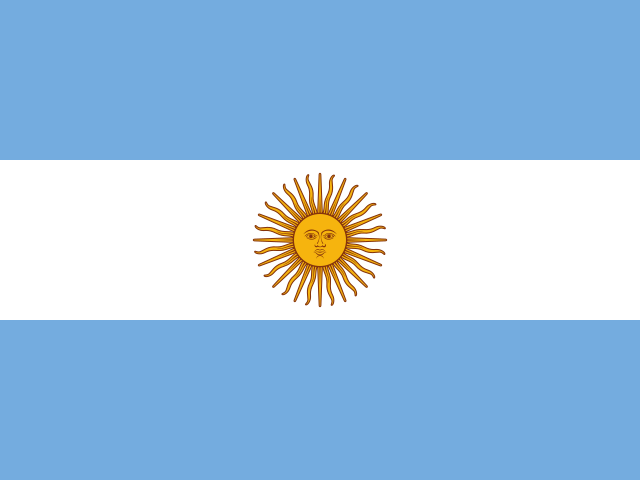 Argentina
 offers a lot for people earning in a stronger currency: Buenos Aires' culture and food, wine country, and Patagonia. It is still good value, but the extreme bargains of the peso-crisis years have largely gone. Inflation has cooled and the gap between the official and informal exchange rates has narrowed, so check how the rates stand before you arrive and decide how to bring money. Urban crime is higher than in most countries here, with phone snatching and pickpocketing the main concerns in Buenos Aires. Daily life runs late, with dinner around ten. The seasons are reversed from the northern hemisphere, so December to February is high summer.
Nomad quick facts
$1520/mo
$2430/mo
119.6 Mbps
1.922 (#92 of 190)
Moderate
Oct–Apr
Available
77 / 100
Score breakdown
Vibrant culture, excellent food and wine, varied landscapes from wine country to Patagonia, good value.
Prices and exchange rates change quickly, higher urban crime than most countries here, very late daily schedule.
Cost of living in Argentina
Argentina remains affordable for nomads earning hard currency, but the extraordinary bargains of its peso-crisis years are largely gone. Inflation has cooled dramatically, yet prices continue to rise and many everyday costs have climbed in dollar terms. The famous blue-dollar/grey-market arbitrage has also narrowed, so Argentina is still good value — just not the exceptional bargain its reputation might suggest.
Estimated monthly cost
Single
$1,520/mo
Couple
$2,430/mo
Cost score inputs
Livingcost
86/100
WB PLI
45.3
Score blends a nomad-realistic monthly cost estimate (built from livingcost.org data, adjusted for short-term nomad spending like furnished housing, coworking, and eating out) with the World Bank's Household Consumption Price Level Index, a broader cross-country cost benchmark. Countries without World Bank price-level data are scored on the livingcost estimate alone. Prices displayed in USD.
The nomad cost estimate reflects a realistic single/couple monthly budget, not a bare local cost of living — actual spending still varies with lifestyle and location within a country.
Sources: livingcost.org · World Bank Household Consumption Price Level Index · Independent nomad cost estimates
Internet in Argentina
Argentina delivers moderate download speeds and solid upload performance, though performance can vary between Buenos Aires and rural regional towns.
Download speed
119.6 Mbps
Upload speed
95.7 Mbps
Latency
37.1 ms
Blends download speed (Ookla Speedtest Global Index) with upload speed and latency (Cloudflare Radar). Speeds are scored between 10 Mbps (0) and 200 Mbps (100); latency counts the opposite way — lower is better. A missing metric doesn't penalize a country, it's scored on whatever data is available.
A national average — city and neighbourhood speeds vary, especially outside major hubs.
Get an eSIM for arrival →Sources: Ookla Speedtest Global Index · Cloudflare Radar
Safety in Argentina
Argentina is generally safe but has noticeably higher urban crime than most of this list; phone snatching, pickpocketing and robberies are the main concern in Buenos Aires, with Rosario carrying a higher violent-crime risk.
Global safety rank
#92 of 190
Peace Index score
1.922 (lower = safer)
WJP Rule of Law rank
#118 of 143
WJP Rule of Law score
0.61 (higher = safer)
Gallup Law & Order rank
#89 of 119
Gallup Law & Order score
69 (higher = safer)
Blends three published safety indices: the Global Peace Index, the WJP Rule of Law Index (Order & Security factor), and the Gallup Global Law and Order Index. Places the Global Peace Index doesn't cover use our own estimate, based on regional peers and crime data. Each is rescaled 0-100 and combined with weights favoring GPI and Gallup slightly over WJP. Not every country is tracked by all three — the blend adjusts to whichever are available (weights are renormalized) rather than penalizing a country for a missing source, though a country tracked by fewer sources carries lower confidence.
As this is national average data, be aware that safety varies significantly by city and region within a country.
Get nomad insurance →Sources: Global Peace Index (Institute for Economics & Peace) · WJP Rule of Law Index (World Justice Project) · Gallup Global Law and Order Index
Tourism & infrastructure in Argentina
Buenos Aires offers a genuinely world-class food and nightlife scene wrapped in European-style architecture. Mendoza's wine country and Bariloche's Patagonian lakes give nomads dramatic, easy-to-reach getaways within the same country.
Happiness rank
#44 of 147
Quality of life rank
#62 of 89
Tourism development rank
#48 of 119
English Proficiency Index
575.0 (26 out of 106)
Within-city transit
Moderate
Between-city transit
Moderate
Spans subtropical north to sub-Antarctic south; Southern Hemisphere seasons, with hot summers and mild-to-cold winters.
Best months: Oct–Apr
Argentina's transit is strongest in Buenos Aires, where the Subte metro, extensive colectivo buses and commuter rail offer cheap, comprehensive coverage via the SUBE card. Outside the capital urban options thin out. Intercity travel depends on a superb long-distance bus network, as passenger rail is limited; domestic flights cover the vast distances. Buenos Aires is dense and walkable.
A weighted blend of published indices: the World Economic Forum's Travel & Tourism Development Index (weighted highest — the strongest predictor of appeal), Numbeo's Quality of Life Index, the World Happiness Report, Gallup's day-to-day enjoyment data, the EF English Proficiency Index, and a public transit assessment covering both within-city and between-city transport. Not every country is scored on all six — the blend adjusts to whichever are available rather than penalizing a country for a missing one.
Sources: WEF Travel & Tourism Development Index · Numbeo Quality of Life Index · World Happiness Report · Gallup · EF English Proficiency Index · Public transit assessment
Argentina digital nomad visa and entry rules
Tourist entry — USA passport
Visa-free — 90 days
Tourism Visa Note
Even though visa-free, proof of onward/return travel is commonly requested by both the airline at check-in and immigration on arrival — don't rely on a one-way ticket alone. If you're arriving from (or transiting more than 12 hours through) a yellow-fever-risk country, you may also be asked for a yellow fever vaccination certificate, even though it's not required for travelers arriving directly from Canada/USA/UK/EU.
Working remotely in Argentina on tourist entry
Visitors may work remotely for an employer abroad without a work visa, provided they entered lawfully and no costs are recharged to a Argentine entity, according to EY's July 2026 guide. Source
In practice
No reports of enforcement against remote workers found (checked October 2026).
Staying longer
One extension is available in person at a Migraciones office during the last 10 days of the stay, for ARS 20,000. Source
Border runs and re-entry
Each return is a fresh admission decision. A 2025 decree lets officers refuse a person claiming tourist status who appears to have another purpose. Source
For a longer stay with explicit permission, see the Digital Nomad Transient Residence below.
Other long-stay options
Student visas are also popular for those wanting a longer stay.
Visa and entry requirements can change. Check the latest information from official government sources before travelling; eligibility, documents and permitted activities depend on your nationality and personal circumstances.
Tax & residency in Argentina
Tax-residency timing
12 months under temporary residence authorizations
How the day count works
A foreign national generally becomes resident after obtaining permanent residence or remaining under temporary residence authorizations for 12 months; this is not a general 183-day presence test.
Other residency triggers
Obtaining permanent residence in Argentina establishes residence; Argentine nationals have separate residence rules.
Remote work before residence
May be taxable. Fees for personal services performed in Argentina may be Argentine-source and taxable before residence, even when paid abroad; treaty and work-arrangement rules can affect treatment.
If you become tax resident
Residents are generally taxable on income from Argentina and abroad; nonresidents are generally taxable only on Argentine-source income.
What this usually means for nomads
A foreign visitor generally does not become resident by a simple 183-day count; permanent residence or 12 months under temporary residence authorizations can establish residence. Fees for work performed in Argentina may be taxable there before residence even when paid from abroad. A longer authorized stay, local home or permanent status increases the risk.
Tax rules can change and depend on your residency status, income structure, time spent in the country and applicable tax treaties. This information is general only and is not financial or tax advice. Consult a qualified tax professional before relying on it.
Top cities for nomads in Argentina
Buenos Aires is the main base, and Palermo is its leafy café and coworking district. Córdoba is a lower-cost university city, Mendoza sits in wine country at the foot of the Andes, and Bariloche is the Patagonian lake town.
Capital & largest; vibrant culture, big nomad scene, but priciest in Argentina.
Lively university city, lower CoL, central.
Wine country at the foot of the Andes; relaxed, outdoorsy.
Patagonian lake town; stunning nature, skiing & hiking.
3rd-largest city; riverfront, cafe culture, lower CoL than BA; pick area carefully.
 Mexico
 Costa Rica
 Brazil