Africa · Sub-Saharan
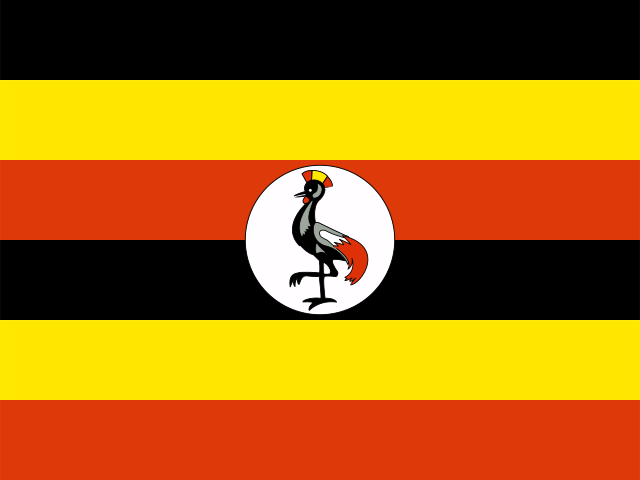 Uganda
 is easier day to day than its reputation suggests. English is the working language, the highland climate is mild all year, and costs are low for accommodation, food and transport. Safety is manageable in the main towns, with petty theft the usual concern; the more serious risk is confined to the western border area near the Democratic Republic of Congo. The country's anti-LGBTQ legislation is harsh and is a decisive consideration for LGBTQ+ travellers. Infrastructure outside the capital is basic and internet is erratic. There is no dedicated nomad visa. The drier periods are December to February and June to August.
Nomad quick facts
$800/mo
$1280/mo
31.3 Mbps
2.420 (#157 of 190)
Limited
Dec–Feb, Jun–Aug
Not available
61.4 / 100
Score breakdown
English-speaking, low cost of living, mild highland climate, gorilla trekking.
Harsh anti-LGBTQ legislation, erratic internet, basic infrastructure outside Kampala, heavy traffic in Kampala, no nomad visa.
Cost of living in Uganda
Uganda offers very low everyday costs, particularly for accommodation, local food and transportation. Kampala has the widest range of housing, restaurants and services, while Entebbe provides a quieter alternative close to the country's main international airport. Local living remains inexpensive, although reliable internet, electricity and higher-end accommodation can cost considerably more.
Estimated monthly cost
Single
$800/mo
Couple
$1,280/mo
Cost score inputs
Livingcost
93/100
WB PLI
36.4
Score blends a nomad-realistic monthly cost estimate (built from livingcost.org data, adjusted for short-term nomad spending like furnished housing, coworking, and eating out) with the World Bank's Household Consumption Price Level Index, a broader cross-country cost benchmark. Countries without World Bank price-level data are scored on the livingcost estimate alone. Prices displayed in USD.
The nomad cost estimate reflects a realistic single/couple monthly budget, not a bare local cost of living — actual spending still varies with lifestyle and location within a country.
Sources: livingcost.org · World Bank Household Consumption Price Level Index · Independent nomad cost estimates
Internet in Uganda
Uganda's modest download speed is workable for normal remote work, while relatively high latency can make video calls and other live applications feel less responsive; Cloudflare Radar data is missing for upload and latency.
Download speed
31.3 Mbps
Upload speed
33.5 Mbps
Latency
84.1 ms
Blends download speed (Ookla Speedtest Global Index) with upload speed and latency (Cloudflare Radar). Speeds are scored between 10 Mbps (0) and 200 Mbps (100); latency counts the opposite way — lower is better. A missing metric doesn't penalize a country, it's scored on whatever data is available.
A national average — city and neighbourhood speeds vary, especially outside major hubs.
Get an eSIM for arrival →Sources: Ookla Speedtest Global Index · Cloudflare Radar
Safety in Uganda
Uganda is generally manageable for nomads in Kampala, Entebbe and Jinja, with petty theft the main everyday concern; the western border area near the Democratic Republic of Congo carries a separate, more serious conflict-related risk that doesn't affect the main travel routes.
Global safety rank
#157 of 190
Peace Index score
2.420 (lower = safer)
WJP Rule of Law rank
#123 of 143
WJP Rule of Law score
0.59 (higher = safer)
Gallup Law & Order rank
#115 of 119
Gallup Law & Order score
60 (higher = safer)
Blends three published safety indices: the Global Peace Index, the WJP Rule of Law Index (Order & Security factor), and the Gallup Global Law and Order Index. Places the Global Peace Index doesn't cover use our own estimate, based on regional peers and crime data. Each is rescaled 0-100 and combined with weights favoring GPI and Gallup slightly over WJP. Not every country is tracked by all three — the blend adjusts to whichever are available (weights are renormalized) rather than penalizing a country for a missing source, though a country tracked by fewer sources carries lower confidence.
As this is national average data, be aware that safety varies significantly by city and region within a country.
Get nomad insurance →Sources: Global Peace Index (Institute for Economics & Peace) · WJP Rule of Law Index (World Justice Project) · Gallup Global Law and Order Index
Tourism & infrastructure in Uganda
Bwindi's mountain gorilla trekking and Jinja's whitewater rafting at the source of the Nile give Uganda genuine adventure appeal, backed by a mild, temperate climate year-round. Kampala itself is chaotic but lively and cheap, though 2023's harsh anti-LGBTQ legislation is a serious consideration worth being aware of.
Happiness rank
#118 of 147
Within-city transit
Limited
Between-city transit
Moderate
Tropical highland; warm and pleasant year-round with two rainy seasons.
Best months: Dec–Feb, Jun–Aug
Uganda's transit is dominated by 'matatu' shared minibuses and boda-boda motorbike taxis, which are cheap and everywhere but chaotic and accident-prone in Kampala's heavy traffic; app-based options (SafeBoda) improve safety. Intercity coaches connect the main towns, and there is little passenger rail. Walkability is limited by congestion and dust; the city centre is compact.
A weighted blend of published indices: the World Economic Forum's Travel & Tourism Development Index (weighted highest — the strongest predictor of appeal), Numbeo's Quality of Life Index, the World Happiness Report, Gallup's day-to-day enjoyment data, the EF English Proficiency Index, and a public transit assessment covering both within-city and between-city transport. Not every country is scored on all six — the blend adjusts to whichever are available rather than penalizing a country for a missing one.
Sources: WEF Travel & Tourism Development Index · Numbeo Quality of Life Index · World Happiness Report · Gallup · EF English Proficiency Index · Public transit assessment
Uganda visa and entry rules for digital nomads
Tourist entry — USA passport
E-Visa required — 90 days
Tourism Visa Note
Single-entry tourist e-visa costs $50 USD, 90 days, via the official government portal — yellow fever certificate mandatory. If Kenya and/or Rwanda are also on the itinerary, the $100 East Africa Tourist Visa covers all three and is usually cheaper than separate visas.
Digital nomad visa
No dedicated digital-nomad route
Visa and entry requirements can change. Check the latest information from official government sources before travelling; eligibility, documents and permitted activities depend on your nationality and personal circumstances.
Tax & residency in Uganda
Tax-residency timing
183 days in a financial year or in any qualifying 12-month period; a multi-year average test also applies
How the day count works
Presence is measured in a financial year or a 12-month period that begins or ends in a year of income; more than 122 days in each of the current and two preceding years is an alternative test.
Other residency triggers
A permanent home in Uganda or government employment posted abroad can establish residence independently of the main presence test.
Remote work before residence
May be taxable. Employment exercised or services rendered in Uganda may be taxable for nonresidents; local-source income can be taxed regardless of where the payer is located.
If you become tax resident
Residents are generally taxed on worldwide income; foreign-source income of a short-term resident and certain foreign-source employment income may be exempt under specific conditions.
What this usually means for nomads
A permanent home, 183 days or a multi-year presence test can create residence. Income from work exercised in Uganda may be taxable before residence. A local home, locally performed services or recurring stays raise the risk; limited foreign-income exemptions have specific conditions.
Tax rules can change and depend on your residency status, income structure, time spent in the country and applicable tax treaties. This information is general only and is not financial or tax advice. Consult a qualified tax professional before relying on it.
Top cities for nomads in Uganda
Kampala is the hilly, busy capital with the most services and heavy traffic. Entebbe is a calm lakeside town by the airport, Jinja is the adventure hub at the source of the Nile, and Lake Bunyonyi is a quiet lake in the south-west.
Capital & largest; a hilly, buzzing city of markets, nightlife & boda-boda motorbikes; chaotic but friendly.
The adventure hub at the source of the Nile; rafting, kayaking & a mellow riverside travellers' scene.
The calm lakeside airport town; botanical gardens & beaches on Lake Victoria.
A serene, island-dotted terraced lake in the southwest; the country's most tranquil escape.
 Kenya
 Pakistan
 Gabon