Africa · N. Africa
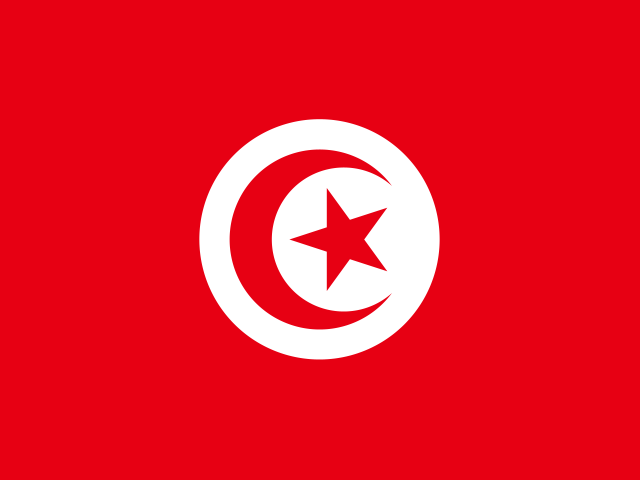 Tunisia
 is a very low-cost Mediterranean destination a short flight from Europe, with a mix of coast, medinas and desert. Internet is the main obstacle to remote work: it is among the slowest of any country here and falls away quickly outside the cities. French and Arabic dominate, and English is limited outside tourist areas. Political power has become increasingly centralised in recent years. Security in the main coastal and tourist areas has improved considerably and is now good. The local currency cannot be exchanged abroad, so spend or change it back before leaving. There is no dedicated nomad visa. April to June and September to October avoid both the summer heat and the winter rain.
Nomad quick facts
$670/mo
$1070/mo
22.0 Mbps
1.947 (#97 of 190)
Moderate
Apr–Jun, Sep–Oct
Not available
65.6 / 100
Score breakdown
Very low cost of living, short flights from Europe, Mediterranean and Saharan scenery, rich history.
Very slow internet, limited English, centralised political power, little nomad infrastructure, no nomad visa.
Cost of living in Tunisia
Tunisia offers low everyday costs alongside a Mediterranean setting, making it one of North Africa's more affordable coastal options. Tunis has the widest range of services and accommodation, while Sousse and other coastal cities offer a more relaxed environment. Local food and markets are inexpensive, although prices rise in areas geared toward international tourism.
Estimated monthly cost
Single
$670/mo
Couple
$1,070/mo
Cost score inputs
Livingcost
96/100
WB PLI
32.7
Score blends a nomad-realistic monthly cost estimate (built from livingcost.org data, adjusted for short-term nomad spending like furnished housing, coworking, and eating out) with the World Bank's Household Consumption Price Level Index, a broader cross-country cost benchmark. Countries without World Bank price-level data are scored on the livingcost estimate alone. Prices displayed in USD.
The nomad cost estimate reflects a realistic single/couple monthly budget, not a bare local cost of living — actual spending still varies with lifestyle and location within a country.
Sources: livingcost.org · World Bank Household Consumption Price Level Index · Independent nomad cost estimates
Internet in Tunisia
Tunisia covers basic web browsing, but low overall download rates and modest upload performance make high-bandwidth remote tasks challenging.
Download speed
22.0 Mbps
Upload speed
17.0 Mbps
Latency
56.5 ms
Blends download speed (Ookla Speedtest Global Index) with upload speed and latency (Cloudflare Radar). Speeds are scored between 10 Mbps (0) and 200 Mbps (100); latency counts the opposite way — lower is better. A missing metric doesn't penalize a country, it's scored on whatever data is available.
A national average — city and neighbourhood speeds vary, especially outside major hubs.
Get an eSIM for arrival →Sources: Ookla Speedtest Global Index · Cloudflare Radar
Safety in Tunisia
Tunisia is generally safe in its main coastal and tourist areas, including Sousse, Hammamet and Djerba; a heavier security presence has been in place at tourist sites since attacks in 2015, and safety has improved substantially since then.
Global safety rank
#97 of 190
Peace Index score
1.947 (lower = safer)
WJP Rule of Law rank
#72 of 143
WJP Rule of Law score
0.72 (higher = safer)
Gallup Law & Order rank
#72 of 119
Gallup Law & Order score
74 (higher = safer)
Blends three published safety indices: the Global Peace Index, the WJP Rule of Law Index (Order & Security factor), and the Gallup Global Law and Order Index. Places the Global Peace Index doesn't cover use our own estimate, based on regional peers and crime data. Each is rescaled 0-100 and combined with weights favoring GPI and Gallup slightly over WJP. Not every country is tracked by all three — the blend adjusts to whichever are available (weights are renormalized) rather than penalizing a country for a missing source, though a country tracked by fewer sources carries lower confidence.
As this is national average data, be aware that safety varies significantly by city and region within a country.
Get nomad insurance →Sources: Global Peace Index (Institute for Economics & Peace) · WJP Rule of Law Index (World Justice Project) · Gallup Global Law and Order Index
Tourism & infrastructure in Tunisia
Tunis's historic medina and coastal suburbs pair with Sidi Bou Said's postcard blue-and-white cliffs and ancient Carthage for genuine cultural depth. This is a cheap, Europe-adjacent base for culture-seekers rather than a plug-and-play nomad setup, given inconsistent internet and a limited English-speaking scene.
Happiness rank
#105 of 147
Quality of life rank
#68 of 89
Tourism development rank
#86 of 119
English Proficiency Index
498.0 (50 out of 106)
Within-city transit
Moderate
Between-city transit
Moderate
Mediterranean north, Sahara south; hot, dry summers and mild, wet winters.
Best months: Apr–Jun, Sep–Oct
Tunisia's transit centres on Tunis, which has the Metro Léger tramway, the TGM light-rail line to the coast and city buses. Intercity travel uses the SNCFT railway along the coast and ubiquitous 'louage' shared taxis that connect towns quickly and cheaply. The medina and city centres are walkable, though vehicles are often crowded and aging.
A weighted blend of published indices: the World Economic Forum's Travel & Tourism Development Index (weighted highest — the strongest predictor of appeal), Numbeo's Quality of Life Index, the World Happiness Report, Gallup's day-to-day enjoyment data, the EF English Proficiency Index, and a public transit assessment covering both within-city and between-city transport. Not every country is scored on all six — the blend adjusts to whichever are available rather than penalizing a country for a missing one.
Sources: WEF Travel & Tourism Development Index · Numbeo Quality of Life Index · World Happiness Report · Gallup · EF English Proficiency Index · Public transit assessment
Tunisia visa and entry rules for digital nomads
Tourist entry — USA passport
Visa-free — 90 days
Tourism Visa Note
Standard visa-free entry — passport valid 6+ months and proof of onward travel may be requested.
Working remotely in Tunisia on tourist entry
Tunisia has no remote work category, and local employment is prohibited on tourist entry. One 2026 nomad guide describes remote work for foreign employers as tolerated; it cites no official source. Source
Border runs and re-entry
One 2026 nomad guide warns that officers can refuse entry on a pattern of back-to-back tourist stamps. Source
Digital nomad visa
No dedicated digital-nomad route
Other long-stay options
Long Stay Visa
Visa and entry requirements can change. Check the latest information from official government sources before travelling; eligibility, documents and permitted activities depend on your nationality and personal circumstances.
Tax & residency in Tunisia
Tax-residency timing
183 days in a calendar year when the principal residence is abroad; principal residence in Tunisia is a separate test
How the day count works
Presence may be continuous or intermittent and is aggregated by calendar year for a person whose principal dwelling is abroad.
Other residency triggers
A principal residence or domicile in Tunisia establishes residence regardless of days.
Remote work before residence
May be taxable. Nonresidents are taxed on Tunisian-source income; salary for work performed in Tunisia may be taxed there even when paid from abroad.
If you become tax resident
Residents are generally taxed on worldwide income; foreign income already taxed in its source country is generally exempt under domestic rules.
What this usually means for nomads
A principal home in Tunisia can create residence, or a person whose main home is abroad can qualify after 183 days in a calendar year. Work performed there may be taxable earlier. A local home, locally exercised work or longer stay raises the risk.
Tax rules can change and depend on your residency status, income structure, time spent in the country and applicable tax treaties. This information is general only and is not financial or tax advice. Consult a qualified tax professional before relying on it.
Top cities for nomads in Tunisia
Tunis is the practical base, with the best services and coworking, a historic medina and seaside suburbs. Sousse is a relaxed coastal city with a UNESCO-listed medina, and Djerba is a sunny island of beaches and whitewashed villages.
Capital & largest; best amenities & coworking, historic medina, seaside suburbs (La Marsa/Carthage).
Coastal city; UNESCO medina, beaches, work-leisure balance, affordable.
Beach-resort town; relaxed, gardens & sea, calmer pace.
Mediterranean island; beaches, whitewashed villages, laid-back, sunny.
 Gambia
 Namibia
 Zambia