Europe · S. Europe
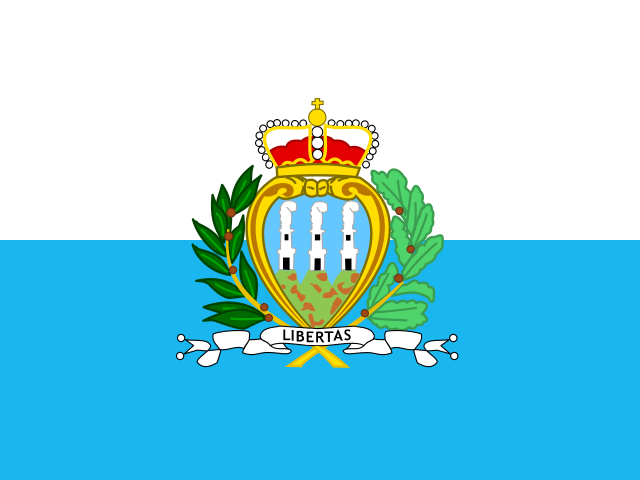 San Marino
 is a tiny medieval republic on a mountain, entirely surrounded by Italy. Its UNESCO-listed old town and three towers are spectacular, and it is one of the safest places anywhere, but it can be seen in a day. It is not a nomad base: it is Italian-speaking, has no airport, offers limited accommodation and amenities, and has no long-stay visa. In practice people stay in nearby Italy and visit. Late spring to summer is the pleasant season.
Nomad quick facts
$1660/mo
$2660/mo
—
—
Limited
May–Sep
Not available
73 / 100
Score breakdown
Extremely safe, UNESCO-listed hilltop old town, quiet, easy day trip from Italy.
Very limited accommodation and amenities, no airport, no long-stay visa or nomad infrastructure.
Cost of living in San Marino
San Marino is unusual for nomads because its tiny territory has limited accommodation and is closely integrated with the surrounding Italian region. Staying in nearby Italian cities such as Rimini can provide a much wider choice of apartments and services, while still making San Marino easy to visit. As a result, the practical cost of spending time in the country depends heavily on where you choose to stay.
Estimated monthly cost
Single
$1,660/mo
Couple
$2,660/mo
Cost score inputs
Livingcost
75/100
WB PLI
83.2
Score blends a nomad-realistic monthly cost estimate (built from livingcost.org data, adjusted for short-term nomad spending like furnished housing, coworking, and eating out) with the World Bank's Household Consumption Price Level Index, a broader cross-country cost benchmark. Countries without World Bank price-level data are scored on the livingcost estimate alone. Prices displayed in USD.
The nomad cost estimate reflects a realistic single/couple monthly budget, not a bare local cost of living — actual spending still varies with lifestyle and location within a country.
Sources: livingcost.org · World Bank Household Consumption Price Level Index · Independent nomad cost estimates
Internet in San Marino
Though no official data is available, San Marino leverages high-speed modern fiber networks, delivering low latency and reliable bandwidth throughout the microstate.
Blends download speed (Ookla Speedtest Global Index) with upload speed and latency (Cloudflare Radar). Speeds are scored between 10 Mbps (0) and 200 Mbps (100); latency counts the opposite way — lower is better. A missing metric doesn't penalize a country, it's scored on whatever data is available.
A national average — city and neighbourhood speeds vary, especially outside major hubs.
Get an eSIM for arrival →Sources: Ookla Speedtest Global Index · Cloudflare Radar
Safety in San Marino
San Marino is exceptionally safe, with almost no crime reported against visitors; its small size and low population density mean nomads face far fewer of the petty-theft and scam risks common in larger tourist destinations.
Blends three published safety indices: the Global Peace Index, the WJP Rule of Law Index (Order & Security factor), and the Gallup Global Law and Order Index. Places the Global Peace Index doesn't cover use our own estimate, based on regional peers and crime data. Each is rescaled 0-100 and combined with weights favoring GPI and Gallup slightly over WJP. Not every country is tracked by all three — the blend adjusts to whichever are available (weights are renormalized) rather than penalizing a country for a missing source, though a country tracked by fewer sources carries lower confidence.
As this is national average data, be aware that safety varies significantly by city and region within a country.
Get nomad insurance →Sources: Global Peace Index (Institute for Economics & Peace) · WJP Rule of Law Index (World Justice Project) · Gallup Global Law and Order Index
Tourism & infrastructure in San Marino
San Marino's UNESCO-listed hilltop old town and iconic Three Towers make for a spectacular day trip, but the entire country can be seen in a few hours. With no airport and no long-stay visa, this is a place to visit from a base in nearby Italy rather than live in.
Within-city transit
Limited
Between-city transit
Limited
Mediterranean-continental hill climate; warm summers and cool, damp winters.
Best months: May–Sep
San Marino is a tiny hilltop microstate with minimal public transit. A cable car links the historic centre to Borgo Maggiore, and buses connect to Rimini in Italy, but there is no railway. Residents and visitors rely on cars, and the steep terrain limits walkability to the compact, pedestrianised old town.
A weighted blend of published indices: the World Economic Forum's Travel & Tourism Development Index (weighted highest — the strongest predictor of appeal), Numbeo's Quality of Life Index, the World Happiness Report, Gallup's day-to-day enjoyment data, the EF English Proficiency Index, and a public transit assessment covering both within-city and between-city transport. Not every country is scored on all six — the blend adjusts to whichever are available rather than penalizing a country for a missing one.
Sources: WEF Travel & Tourism Development Index · Numbeo Quality of Life Index · World Happiness Report · Gallup · EF English Proficiency Index · Public transit assessment
San Marino visa and entry rules for digital nomads
Tourist entry — USA passport
Visa-free — 90 days
Tourism Visa Note
No visa needed for San Marino itself, but it has no airport of its own — you can only reach it by land through Italy, so Schengen entry rules apply de facto to actually get there. Some municipalities require visitors to register their address with local police/town hall within a few days of arrival.
Digital nomad visa
No dedicated digital-nomad route
Other long-stay options
San Marino isn't in the EU or Schengen, but it has an open border with Italy, so in practice you arrive via Italy on the Schengen allowance. It has no nomad visa, and residency is highly restrictive — typically requiring substantial financial means or investment, long-term ties, and lengthy qualifying periods, with permits tightly limited. Realistically, anyone wanting to stay in the area lives in surrounding Italy and visits.
Visa and entry requirements can change. Check the latest information from official government sources before travelling; eligibility, documents and permitted activities depend on your nationality and personal circumstances.
Tax & residency in San Marino
Tax-residency timing
No fixed day count; residence may apply when registered, living in San Marino, or centred there for most of the tax period
How the day count works
The legal test asks whether the person is registered as resident, lives in the territory, or has their centre of vital interests there for most of the tax period; these are alternative tests.
Other residency triggers
Registered residence, actual abode, or the centre of vital interests in San Marino for most of the tax period can establish residence.
Remote work before residence
May be taxable. Work or services carried out in San Marino can create locally sourced income before residence; the employment or business arrangement and treaty rules matter.
If you become tax resident
Residents are generally taxed on worldwide income; nonresidents are generally taxed on income sourced in San Marino, subject to treaty relief.
What this usually means for nomads
Registration, living in San Marino or having a centre of vital interests there for most of the tax period can create residence without a fixed day-count rule. Work performed locally may be taxable before residence. Establishing a home, registering or moving personal and economic ties increases the risk.
Tax rules can change and depend on your residency status, income structure, time spent in the country and applicable tax treaties. This information is general only and is not financial or tax advice. Consult a qualified tax professional before relying on it.
Top cities for nomads in San Marino
The City of San Marino is the hilltop old town, small, steep and focused on visitors. Dogana is the main entry point from Italy with shops and businesses, and Borgo Maggiore is the market town linked to the capital by cable car.
Capital; UNESCO hilltop old town, three towers & museums; tourist-focused, tiny and steep.
Largest settlement (a curazia of Serravalle); main entry from Italy, shops & business; workaday border town.
Second-largest town & historic market hub; a cable car climbs to the capital; lively piazza.
Smallest, quietest castello; a tiny medieval hamlet with panoramic views; residential calm.
 Kosovo
 Vatican
 Kuwait