Asia · S. Asia
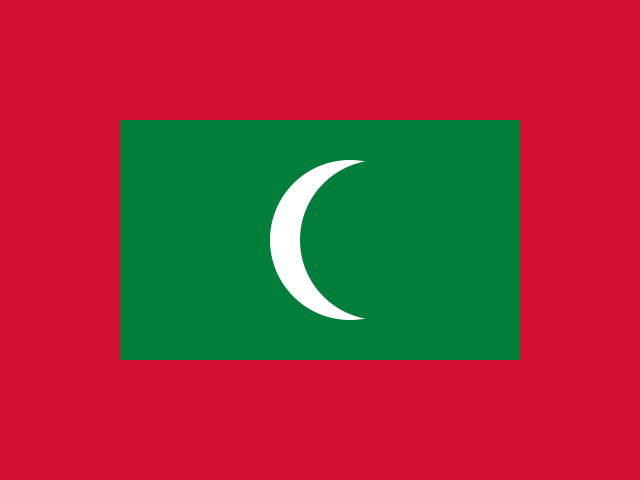 Maldives
The Maldives works for a longer stay only if you choose the right kind of island. Resort islands are a luxury product priced for short holidays, while inhabited local islands let you stay for weeks at guesthouse prices. The local islands come with cultural rules that do not apply at resorts: no alcohol, and modest dress away from designated tourist beaches. Internet quality depends on the property more than the region, so confirm speeds with wherever you plan to stay. Transport between islands is expensive. Safety is very good, with occasional petty crime in the capital. There is no dedicated nomad visa. The dry season from November to April brings the calmest seas.
Nomad quick facts
$1680/mo
$2690/mo
—
—
Limited
Nov–Apr
Not available
67.2 / 100
Score breakdown
World-class beaches and diving, affordable guesthouses on local islands, very safe.
Very expensive resort islands, costly inter-island transport, variable internet, alcohol banned on local islands, no nomad visa.
Cost of living in the Maldives
The Maldives can be extremely expensive at private island resorts, but costs are much lower on inhabited local islands. Malé has the widest range of services and accommodation, while islands such as Maafushi offer guesthouses and a more relaxed setting at lower prices than the resort market. Food and transport remain more affordable on local islands, though imported goods still carry a premium.
Estimated monthly cost
Single
$1,680/mo
Couple
$2,690/mo
Cost score inputs
Livingcost
75/100
WB PLI
62.1
Score blends a nomad-realistic monthly cost estimate (built from livingcost.org data, adjusted for short-term nomad spending like furnished housing, coworking, and eating out) with the World Bank's Household Consumption Price Level Index, a broader cross-country cost benchmark. Countries without World Bank price-level data are scored on the livingcost estimate alone. Prices displayed in USD.
The nomad cost estimate reflects a realistic single/couple monthly budget, not a bare local cost of living — actual spending still varies with lifestyle and location within a country.
Sources: livingcost.org · World Bank Household Consumption Price Level Index · Independent nomad cost estimates
Internet in the Maldives
The Maldives lacks dedicated country-level speed and latency data, with internet quality varying significantly between resort islands and local island communities.
Blends download speed (Ookla Speedtest Global Index) with upload speed and latency (Cloudflare Radar). Speeds are scored between 10 Mbps (0) and 200 Mbps (100); latency counts the opposite way — lower is better. A missing metric doesn't penalize a country, it's scored on whatever data is available.
A national average — city and neighbourhood speeds vary, especially outside major hubs.
Get an eSIM for arrival →Sources: Ookla Speedtest Global Index · Cloudflare Radar
Safety in the Maldives
The Maldives is very safe for nomads, particularly on resort islands and in Hulhumalé; Malé has a higher rate of petty crime and occasional drug-related incidents, though these rarely affect visitors who stick to the main tourist and residential areas.
Blends three published safety indices: the Global Peace Index, the WJP Rule of Law Index (Order & Security factor), and the Gallup Global Law and Order Index. Places the Global Peace Index doesn't cover use our own estimate, based on regional peers and crime data. Each is rescaled 0-100 and combined with weights favoring GPI and Gallup slightly over WJP. Not every country is tracked by all three — the blend adjusts to whichever are available (weights are renormalized) rather than penalizing a country for a missing source, though a country tracked by fewer sources carries lower confidence.
As this is national average data, be aware that safety varies significantly by city and region within a country.
Get nomad insurance →Sources: Global Peace Index (Institute for Economics & Peace) · WJP Rule of Law Index (World Justice Project) · Gallup Global Law and Order Index
Tourism & infrastructure in the Maldives
The Maldives' overwater villas and turquoise atolls are the definition of luxury, but budget-friendly local islands like Maafushi offer a real, if more conservative, alternative for staying longer. Getting between islands means seaplanes or boats rather than roads, so this is more about picking one base than exploring widely.
Within-city transit
Limited
Between-city transit
Limited
Tropical; hot and humid year-round, with a drier northeast monsoon and a wetter southwest monsoon (May–Oct).
Best months: Nov–Apr
The Maldives' transit is defined by water: travel between its scattered islands and resorts relies on public ferries (dhoni), speedboats and seaplanes. The capital Malé, one of the world's most densely packed cities, is walkable, served by minibuses and linked to the airport island by the Sinamalé Bridge. There is no rail, and resort transfers dominate tourist travel.
A weighted blend of published indices: the World Economic Forum's Travel & Tourism Development Index (weighted highest — the strongest predictor of appeal), Numbeo's Quality of Life Index, the World Happiness Report, Gallup's day-to-day enjoyment data, the EF English Proficiency Index, and a public transit assessment covering both within-city and between-city transport. Not every country is scored on all six — the blend adjusts to whichever are available rather than penalizing a country for a missing one.
Sources: WEF Travel & Tourism Development Index · Numbeo Quality of Life Index · World Happiness Report · Gallup · EF English Proficiency Index · Public transit assessment
Maldives visa and entry rules for digital nomads
Tourist entry — USA passport
Visa on arrival — 30 days
Tourism Visa Note
The 30-day visa on arrival is free, but you must complete the IMUGA Traveller Declaration online within 96 hours before arrival, show a confirmed booking at a REGISTERED tourist resort/hotel/guesthouse (not any arbitrary accommodation), and carry a return/onward ticket. Immigration can also ask for proof of funds (roughly $100+/day is the commonly cited guideline). Extendable to 90 days total via your resort/guesthouse.
Working remotely in the Maldives on tourist entry
A work visa must be obtained before travel in order to work, according to UK government travel advice. Remote work for a foreign employer is not addressed. Source
Digital nomad visa
No dedicated digital-nomad route
Other long-stay options
The Maldives grants a free 30-day visa on arrival to all nationalities (extendable to 90 days), which covers most stays; there's no dedicated nomad visa. Longer-term options are limited to employer-sponsored work permits and a newer investment-based residence scheme for significant investors. Note that on inhabited local islands (versus resorts) you're subject to local Islamic law, so a long stay means respecting conservative norms.
Visa and entry requirements can change. Check the latest information from official government sources before travelling; eligibility, documents and permitted activities depend on your nationality and personal circumstances.
Tax & residency in the Maldives
Tax-residency timing
More than 183 days in any 12-month period commencing or ending in a tax year
How the day count works
Days are aggregated in any qualifying 12-month period; intended presence may also satisfy the statutory test.
Other residency triggers
A permanent place of living in the Maldives establishes residence; government employees posted overseas are also included.
Remote work before residence
May be taxable. Nonresidents and temporary residents are taxed on Maldives-derived income; income for work or services carried out there may be Maldives-derived.
If you become tax resident
Residents are taxed on worldwide income; nonresidents and temporary residents are taxed on Maldives-derived income.
What this usually means for nomads
A stay exceeding 183 days in a qualifying 12-month period, or a permanent place of living, can create residence. Maldives-derived work income may be taxable before residence. A permanent home, intended extended stay or locally performed work raises the risk.
Tax rules can change and depend on your residency status, income structure, time spent in the country and applicable tax treaties. This information is general only and is not financial or tax advice. Consult a qualified tax professional before relying on it.
Top cities for nomads in Maldives
Maafushi is the best-known local island for budget stays, with guesthouses and dive trips. Hulhumalé is a modern reclaimed island by the airport, and Malé is the dense capital with the most services.
Capital & largest; among the most densely populated cities on earth; port, services & flight connections, but cramped with no real beaches.
Budget local island; guesthouses, bikini beach & dive/snorkel trips; the backpacker & remote-work base.
Reclaimed island by the airport; modern, planned, with beaches & cafes; the overflow city for Malé.
One-island atoll in the deep south; tiger-shark diving, freshwater lakes & unique ecology; remote and authentic.
 Belize
 Laos
 Cabo Verde