North America · Caribbean
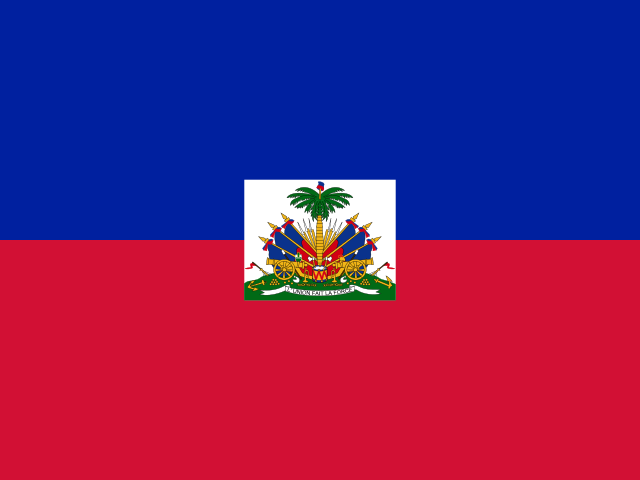 Haiti
Haiti's security crisis overrides any discussion of its culture or history. Armed gangs control large parts of Port-au-Prince and the surrounding region, basic services have broken down, and most governments advise against all travel. The country has a rich Creole and Vodou culture and landmarks of real historical importance, but none of them justify the current risk. Conditions remain too unstable to plan around, whatever the season or budget.
Nomad quick facts
$680/mo
$1090/mo
48.6 Mbps
2.755 (#169 of 190)
Limited
Dec–Mar
Not available
52.8 / 100
Score breakdown
Rich cultural heritage, historic landmarks, vibrant arts tradition.
Severe gang violence, official warnings against all travel, collapsed basic services and infrastructure.
Cost of living in Haiti
Haiti has very low local costs for food, accommodation and basic services, but supply problems can make prices and availability unpredictable. Port-au-Prince offers the widest range of services, although security and infrastructure are significant considerations. Local markets can keep everyday spending low, but reliable accommodation and other essentials may command a premium.
Estimated monthly cost
Single
$680/mo
Couple
$1,090/mo
Cost score inputs
Livingcost
95/100
WB PLI
102.2
Score blends a nomad-realistic monthly cost estimate (built from livingcost.org data, adjusted for short-term nomad spending like furnished housing, coworking, and eating out) with the World Bank's Household Consumption Price Level Index, a broader cross-country cost benchmark. Countries without World Bank price-level data are scored on the livingcost estimate alone. Prices displayed in USD.
The nomad cost estimate reflects a realistic single/couple monthly budget, not a bare local cost of living — actual spending still varies with lifestyle and location within a country.
Sources: livingcost.org · World Bank Household Consumption Price Level Index · Independent nomad cost estimates
Internet in Haiti
Haiti has workable download and upload speeds, but relatively high latency can make video calls feel less responsive; network reliability is a much bigger concern, particularly around Port-au-Prince.
Download speed
48.6 Mbps
Upload speed
36.8 Mbps
Latency
62.7 ms
Blends download speed (Ookla Speedtest Global Index) with upload speed and latency (Cloudflare Radar). Speeds are scored between 10 Mbps (0) and 200 Mbps (100); latency counts the opposite way — lower is better. A missing metric doesn't penalize a country, it's scored on whatever data is available.
A national average — city and neighbourhood speeds vary, especially outside major hubs.
Get an eSIM for arrival →Sources: Ookla Speedtest Global Index · Cloudflare Radar
Safety in Haiti
Haiti is in the midst of a severe security crisis, with armed gangs controlling large parts of Port-au-Prince and the surrounding region; an international security force has made some recent gains, but the country isn't currently viable for nomad travel, and most governments advise against travel there entirely.
Global safety rank
#169 of 190
Peace Index score
2.755 (lower = safer)
WJP Rule of Law rank
#138 of 143
WJP Rule of Law score
0.43 (higher = safer)
Blends three published safety indices: the Global Peace Index, the WJP Rule of Law Index (Order & Security factor), and the Gallup Global Law and Order Index. Places the Global Peace Index doesn't cover use our own estimate, based on regional peers and crime data. Each is rescaled 0-100 and combined with weights favoring GPI and Gallup slightly over WJP. Not every country is tracked by all three — the blend adjusts to whichever are available (weights are renormalized) rather than penalizing a country for a missing source, though a country tracked by fewer sources carries lower confidence.
As this is national average data, be aware that safety varies significantly by city and region within a country.
Get nomad insurance →Sources: Global Peace Index (Institute for Economics & Peace) · WJP Rule of Law Index (World Justice Project) · Gallup Global Law and Order Index
Tourism & infrastructure in Haiti
The mountaintop Citadelle Laferrière fortress and a vibrant art and Vodou culture speak to Haiti's rich history as the world's first Black republic. A severe security collapse since 2024 has made it one of the world's most dangerous places, though, and this isn't currently a viable travel or nomad destination.
English Proficiency Index
444.0 (83 out of 106)
Within-city transit
Limited
Between-city transit
Limited
Tropical; hot and humid with two wet seasons and Aug–Oct hurricane risk, cooler in the mountains.
Best months: Dec–Mar
Haiti's transit is dominated by colourful 'tap-tap' shared trucks and buses plus moto-taxis, cheap and ubiquitous but crowded and informal, with no passenger rail. Intercity travel uses buses and shared vehicles over congested, often-poor roads. Severe insecurity and gang activity heavily restrict movement, especially in Port-au-Prince, and walkability is limited by safety concerns and traffic.
A weighted blend of published indices: the World Economic Forum's Travel & Tourism Development Index (weighted highest — the strongest predictor of appeal), Numbeo's Quality of Life Index, the World Happiness Report, Gallup's day-to-day enjoyment data, the EF English Proficiency Index, and a public transit assessment covering both within-city and between-city transport. Not every country is scored on all six — the blend adjusts to whichever are available rather than penalizing a country for a missing one.
Sources: WEF Travel & Tourism Development Index · Numbeo Quality of Life Index · World Happiness Report · Gallup · EF English Proficiency Index · Public transit assessment
Haiti visa and entry rules for digital nomads
Tourist entry — USA passport
Visa-free — 90 days
Tourism Visa Note
Proof of onward or return travel and a completed arrival/immigration form are required, even without a visa.
Digital nomad visa
No dedicated digital-nomad route
Visa and entry requirements can change. Check the latest information from official government sources before travelling; eligibility, documents and permitted activities depend on your nationality and personal circumstances.
Tax & residency in Haiti
Tax-residency timing
183 days in a year
How the day count works
Presence test within the tax year under the 2005 income-tax decree
Other residency triggers
Professional activity in Haiti or the centre of economic interests there may also establish residence
Remote work before residence
May be taxable. Nonresidents receiving Haiti-source income are liable; services physically performed in Haiti may be local-source income
If you become tax resident
Residents are generally taxed on worldwide income; nonresidents on Haiti-source income
What this usually means for nomads
A stay reaching 183 days, local professional activity, or a centre of economic interests may create residence. Local work income may be taxable before residence. A local home, work activity or substantial economic ties increases exposure.
Tax rules can change and depend on your residency status, income structure, time spent in the country and applicable tax treaties. This information is general only and is not financial or tax advice. Consult a qualified tax professional before relying on it.
Top cities for nomads in Haiti
Port-au-Prince is largely paralysed by gang violence. Cap-Haïtien, in the north, is calmer and is the gateway to the Citadelle fortress, but travel anywhere in the country is currently advised against.
Capital & largest; the crowded seaside hub, now largely paralysed by gang violence & political collapse.
The calmer, historic northern second city; gateway to the Citadelle; colonial streets & nearby beaches.
A southern arts-and-crafts town famous for its carnival, papier-mâché & faded colonial architecture.
A colossal early-1800s mountaintop fortress (with the Sans-Souci palace); a UNESCO symbol of independence.
 Burkina Faso
 Iraq
 DR Congo