South America
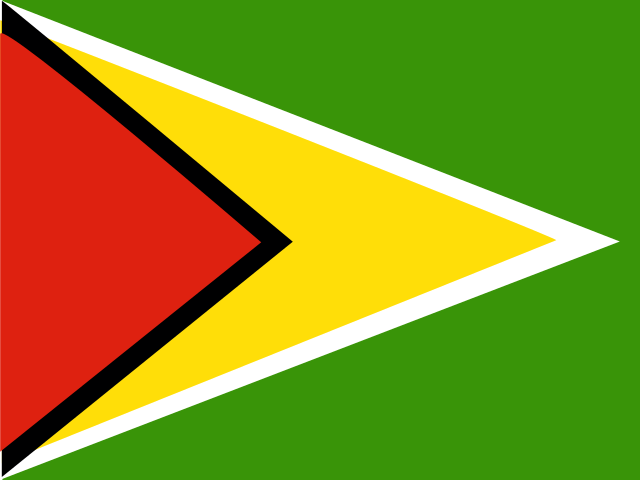 Guyana
 is the only country in South America where English is the everyday language, and an oil-driven boom is changing its capital faster than the infrastructure can keep up. Georgetown feels more Caribbean than Latin American. Robbery and theft are more common there than in most countries here, so take real care and local advice. Internet is good in the capital and drops away quickly elsewhere, and the wildlife-rich interior is a serious, costly expedition. Accommodation prices have risen with the boom. There is no dedicated nomad visa. The drier months are roughly February to April and August to November.
Nomad quick facts
$1520/mo
$2430/mo
142.8 Mbps
2.093 (#130 of 190)
Limited
Feb–Apr, Aug–Nov
Not available
67 / 100
Score breakdown
English-speaking, fast internet in Georgetown, rainforest and wildlife, few tourists.
Robbery and theft in Georgetown, limited tourism infrastructure, patchy internet outside the capital, rising accommodation costs, no nomad visa.
Cost of living in Guyana
Guyana has moderate living costs, although Georgetown's rapid growth has pushed accommodation prices upward. The capital offers by far the widest selection of housing, restaurants and services, while areas outside the commercial center can provide better value. Local food is relatively affordable, but imported goods can be expensive.
Estimated monthly cost
Single
$1,520/mo
Couple
$2,430/mo
Cost score inputs
Livingcost
78/100
WB PLI
46.9
Score blends a nomad-realistic monthly cost estimate (built from livingcost.org data, adjusted for short-term nomad spending like furnished housing, coworking, and eating out) with the World Bank's Household Consumption Price Level Index, a broader cross-country cost benchmark. Countries without World Bank price-level data are scored on the livingcost estimate alone. Prices displayed in USD.
The nomad cost estimate reflects a realistic single/couple monthly budget, not a bare local cost of living — actual spending still varies with lifestyle and location within a country.
Sources: livingcost.org · World Bank Household Consumption Price Level Index · Independent nomad cost estimates
Internet in Guyana
Guyana delivers strong download rates and dependable upload throughput in Georgetown, though higher ping times require extra buffer time for real-time collaboration.
Download speed
142.8 Mbps
Upload speed
63.2 Mbps
Latency
69.0 ms
Blends download speed (Ookla Speedtest Global Index) with upload speed and latency (Cloudflare Radar). Speeds are scored between 10 Mbps (0) and 200 Mbps (100); latency counts the opposite way — lower is better. A missing metric doesn't penalize a country, it's scored on whatever data is available.
A national average — city and neighbourhood speeds vary, especially outside major hubs.
Get an eSIM for arrival →Sources: Ookla Speedtest Global Index · Cloudflare Radar
Safety in Guyana
Guyana has a higher crime rate than most Caribbean and South American destinations on this list, with robbery and theft more common in Georgetown; it remains lightly touristed by nomads, so extra caution and local guidance matter more here than in more established hubs.
Global safety rank
#130 of 190
Peace Index score
2.093 (lower = safer)
WJP Rule of Law rank
#110 of 143
WJP Rule of Law score
0.63 (higher = safer)
Blends three published safety indices: the Global Peace Index, the WJP Rule of Law Index (Order & Security factor), and the Gallup Global Law and Order Index. Places the Global Peace Index doesn't cover use our own estimate, based on regional peers and crime data. Each is rescaled 0-100 and combined with weights favoring GPI and Gallup slightly over WJP. Not every country is tracked by all three — the blend adjusts to whichever are available (weights are renormalized) rather than penalizing a country for a missing source, though a country tracked by fewer sources carries lower confidence.
As this is national average data, be aware that safety varies significantly by city and region within a country.
Get nomad insurance →Sources: Global Peace Index (Institute for Economics & Peace) · WJP Rule of Law Index (World Justice Project) · Gallup Global Law and Order Index
Tourism & infrastructure in Guyana
Georgetown's colonial wooden architecture gives it a distinct character among South American capitals, while the thunderous Kaieteur Falls deep in the Amazon interior is the country's real showstopper. That interior is genuinely hard and expensive to reach, so this suits an off-radar adventure more than routine day trips.
Within-city transit
Limited
Between-city transit
Limited
Tropical; hot and humid year-round with two wet seasons.
Best months: Feb–Apr, Aug–Nov
Guyana's transit consists of privately run minibuses and shared taxis along the coastal road, cheap but informal and crowded. There is no passenger rail, and reaching the vast forested interior requires small aircraft, riverboats or 4x4s. Georgetown, the compact capital, is walkable, but a car or hired driver is useful for getting around.
A weighted blend of published indices: the World Economic Forum's Travel & Tourism Development Index (weighted highest — the strongest predictor of appeal), Numbeo's Quality of Life Index, the World Happiness Report, Gallup's day-to-day enjoyment data, the EF English Proficiency Index, and a public transit assessment covering both within-city and between-city transport. Not every country is scored on all six — the blend adjusts to whichever are available rather than penalizing a country for a missing one.
Sources: WEF Travel & Tourism Development Index · Numbeo Quality of Life Index · World Happiness Report · Gallup · EF English Proficiency Index · Public transit assessment
Guyana visa and entry rules for digital nomads
Tourist entry — USA passport
Visa-free — 90 days
Tourism Visa Note
Not a straightforward visa-on-arrival — you need advance approval from Guyana's Ministry of Home Affairs before travel (typically arranged by phone/email with the Department of Immigration), then pay the fee on arrival. Budget extra lead time versus a typical e-visa country.
Working remotely in Guyana on tourist entry
Work of any kind, including remote work, is permitted only with a standard work visa, according to EY's July 2026 global guide. Source
Staying longer
One-month extensions are requested from Guyana's immigration service. Source
Digital nomad visa
No dedicated digital-nomad route
Other long-stay options
Yes (for business, student, and employment)
Visa and entry requirements can change. Check the latest information from official government sources before travelling; eligibility, documents and permitted activities depend on your nationality and personal circumstances.
Tax & residency in Guyana
Tax-residency timing
More than 183 days in a calendar year; permanent residence or intent to reside permanently also qualifies
How the day count works
Presence is counted in the calendar year; the residence test also includes permanent residence or intent to reside permanently while in Guyana.
Other residency triggers
Residing permanently or intending while in Guyana to reside permanently can establish tax residence apart from the day test.
Remote work before residence
May be taxable. A nonresident may be taxed on Guyana-derived income, including income from work or services carried on there; treaty and employment terms may affect the result.
If you become tax resident
Residents are generally taxed on worldwide income; nonresidents are generally taxed on Guyana-derived income. Temporary residents are generally not taxed on foreign income.
What this usually means for nomads
More than 183 days in a calendar year, or permanent residence or intent to settle, can establish residence. Guyana-derived work income may be taxable before residence. A permanent home, local work or an extended stay raises the risk.
Tax rules can change and depend on your residency status, income structure, time spent in the country and applicable tax treaties. This information is general only and is not financial or tax advice. Consult a qualified tax professional before relying on it.
Top cities for nomads in Guyana
Georgetown has nearly all of the infrastructure and internet, along with colonial wooden architecture. Bartica is the river town that serves as the gateway to the interior.
Capital & largest; nearly all infra & internet, colonial wooden architecture, English-speaking; humid & gritty.
Second town; former bauxite-mining hub, quieter and more local.
Riverside eastern town; laid-back, colonial-era streets, gateway to Berbice.
Gateway to the interior'; river-junction town for rainforest & goldfields, remote.
 Honduras
 Suriname
 Guatemala