Europe · Nordics
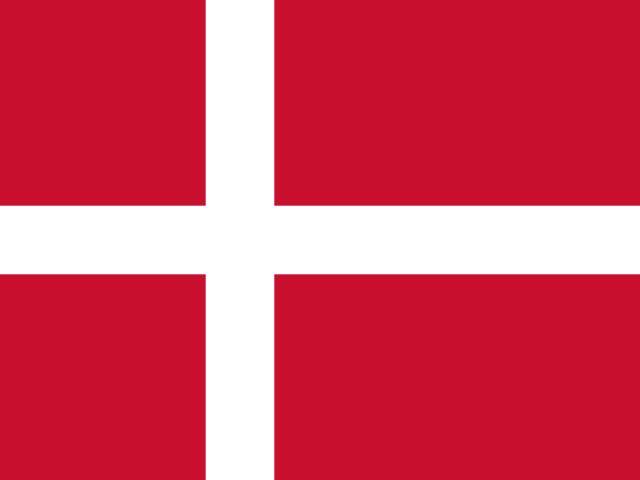 Denmark
 is exceptionally safe, well organised and easy for English speakers, with excellent infrastructure and public services. It is also very expensive, and there are few cheaper corners to retreat to. Two practical points surprise newcomers. Copenhagen runs on bicycles, so renting one early makes sense, and many payments rely on a local mobile app that is awkward without a Danish bank account, so carry a good travel card. Danes are warm but have established social circles, and building local friendships takes effort. There is no dedicated nomad visa. The long days from May to August are the best time, and winters are dark.
Nomad quick facts
$2660/mo
$4260/mo
287.8 Mbps
1.504 (#16 of 190)
Strong
May–Aug
Not available
77.4 / 100
Score breakdown
Exceptional safety, excellent infrastructure and public services, near-universal English, very fast internet.
Very high cost of living, long dark winters, hard to join local social circles, no nomad visa.
Cost of living in Denmark
Denmark is one of Europe's more expensive countries, with housing, dining and everyday services all contributing to high monthly costs. Copenhagen is particularly costly, while smaller cities can provide some relief without sacrificing Denmark's excellent infrastructure and quality of life. For nomads, self-catering and longer-term accommodation are important if keeping expenses under control.
Estimated monthly cost
Single
$2,660/mo
Couple
$4,260/mo
Cost score inputs
Livingcost
54/100
WB PLI
104.5
Score blends a nomad-realistic monthly cost estimate (built from livingcost.org data, adjusted for short-term nomad spending like furnished housing, coworking, and eating out) with the World Bank's Household Consumption Price Level Index, a broader cross-country cost benchmark. Countries without World Bank price-level data are scored on the livingcost estimate alone. Prices displayed in USD.
The nomad cost estimate reflects a realistic single/couple monthly budget, not a bare local cost of living — actual spending still varies with lifestyle and location within a country.
Sources: livingcost.org · World Bank Household Consumption Price Level Index · Independent nomad cost estimates
Internet in Denmark
Denmark features world-class digital infrastructure with widespread fiber access, ultra-low latency, and high symmetrical upload speeds.
Download speed
287.8 Mbps
Upload speed
118.5 Mbps
Latency
28.5 ms
Blends download speed (Ookla Speedtest Global Index) with upload speed and latency (Cloudflare Radar). Speeds are scored between 10 Mbps (0) and 200 Mbps (100); latency counts the opposite way — lower is better. A missing metric doesn't penalize a country, it's scored on whatever data is available.
A national average — city and neighbourhood speeds vary, especially outside major hubs.
Get an eSIM for arrival →Sources: Ookla Speedtest Global Index · Cloudflare Radar
Safety in Denmark
Denmark is exceptionally safe, with low crime and strong rule of law; bike theft is the most common issue for nomads, especially in Copenhagen, while pickpocketing at train stations and tourist sites is a lesser but real risk.
Global safety rank
#16 of 190
Peace Index score
1.504 (lower = safer)
WJP Rule of Law rank
#4 of 143
WJP Rule of Law score
0.93 (higher = safer)
Gallup Law & Order rank
#15 of 119
Gallup Law & Order score
90 (higher = safer)
Blends three published safety indices: the Global Peace Index, the WJP Rule of Law Index (Order & Security factor), and the Gallup Global Law and Order Index. Places the Global Peace Index doesn't cover use our own estimate, based on regional peers and crime data. Each is rescaled 0-100 and combined with weights favoring GPI and Gallup slightly over WJP. Not every country is tracked by all three — the blend adjusts to whichever are available (weights are renormalized) rather than penalizing a country for a missing source, though a country tracked by fewer sources carries lower confidence.
As this is national average data, be aware that safety varies significantly by city and region within a country.
Get nomad insurance →Sources: Global Peace Index (Institute for Economics & Peace) · WJP Rule of Law Index (World Justice Project) · Gallup Global Law and Order Index
Tourism & infrastructure in Denmark
Copenhagen is gorgeous, high-trust, and famously bike-friendly, with Aarhus offering a cheaper alternative for city living. The city rewards exploring on two wheels, though building a local social circle takes real effort given Danes' more reserved, established friend groups.
Happiness rank
#3 of 147
Quality of life rank
#4 of 89
Tourism development rank
#16 of 119
English Proficiency Index
611.0 (7 out of 106)
Within-city transit
Strong
Between-city transit
Strong
Temperate maritime; mild summers, cool winters and changeable, often-windy weather.
Best months: May–Aug
Denmark has excellent transit. Copenhagen's driverless metro, S-train commuter rail and buses are integrated and reliable, and the city is world-renowned for cycling. DSB intercity trains connect the country efficiently, aided by the bridges to Zealand and Sweden. Cities are compact, flat and exceptionally walkable and bike-friendly.
A weighted blend of published indices: the World Economic Forum's Travel & Tourism Development Index (weighted highest — the strongest predictor of appeal), Numbeo's Quality of Life Index, the World Happiness Report, Gallup's day-to-day enjoyment data, the EF English Proficiency Index, and a public transit assessment covering both within-city and between-city transport. Not every country is scored on all six — the blend adjusts to whichever are available rather than penalizing a country for a missing one.
Sources: WEF Travel & Tourism Development Index · Numbeo Quality of Life Index · World Happiness Report · Gallup · EF English Proficiency Index · Public transit assessment
Denmark visa and entry rules for digital nomads
Tourist entry — USA passport
Visa-free — 90 days
Tourism Visa Note
Part of the Schengen Area — max 90 days within any rolling 180-day period across ALL Schengen countries combined, not per country. Land border crossings often go unstamped, so track your own dates.
Working remotely in Denmark on tourist entry
Visitors may work remotely for an employer abroad without a work visa, provided they entered lawfully and no costs are recharged to a Danish entity, according to EY's July 2026 guide. Source
In practice
The EU Entry/Exit System now logs every entry and exit digitally. It flagged nearly 7,000 overstayers in its first six months, according to press reports from May 2026. Source
Staying longer
EU visa-waiver guidance provides no extension of the 90 days. A longer stay requires a national long-stay visa or residence permit. Source
Border runs and re-entry
A border run does not reset the allowance: time in every Schengen country counts toward the same total. Source
Digital nomad visa
No dedicated digital-nomad route
Other long-stay options
Type D Visa
Visa and entry requirements can change. Check the latest information from official government sources before travelling; eligibility, documents and permitted activities depend on your nationality and personal circumstances.
Tax & residency in Denmark
Tax-residency timing
More than 6 consecutive months; a Danish home can trigger liability from moving in
How the day count works
A stay exceeding six consecutive months creates full liability, including brief breaks; the holiday exception is limited to three consecutive months or 180 days in a 12-month period and requires no work. A home in Denmark can establish full liability on moving in.
Other residency triggers
Moving into a home in Denmark can establish full tax liability from the date of the move; treaty residence may depend on personal and financial interests.
Remote work before residence
May be taxable. Pay for work physically performed in Denmark can be Danish-source and subject to limited tax liability before full residence; applicable treaties and employment facts matter.
If you become tax resident
People with full tax liability are generally taxed on Danish and foreign income, subject to treaty relief and domestic rules.
What this usually means for nomads
Working remotely in Denmark means the holiday exception to the six-month stay test may not apply; moving into a Danish home can create full tax liability sooner. Pay for work performed there may also be taxable before full residence. A long stay, Danish home or strong personal and financial ties increases the risk.
Tax rules can change and depend on your residency status, income structure, time spent in the country and applicable tax treaties. This information is general only and is not financial or tax advice. Consult a qualified tax professional before relying on it.
Top cities for nomads in Denmark
Copenhagen has the largest expat scene and the highest costs. Aarhus is a younger university city and easier on the budget, and Odense and Aalborg are smaller, more affordable alternatives.
Capital & largest; big expat scene, top amenities, but high CoL.
2nd city; young university vibe, relaxed, cheaper than Copenhagen.
Mid-size cycling city; Hans Christian Andersen charm, affordable.
Up-and-coming northern city; revived waterfront, student scene, low CoL.
 Norway
 Hong Kong
 Netherlands