North America · Caribbean
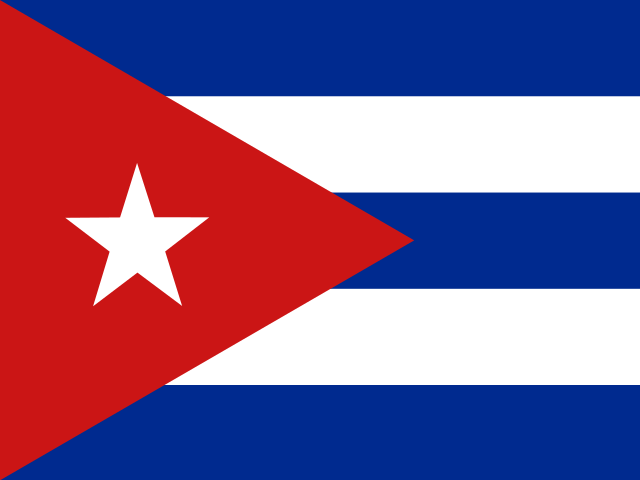 Cuba
Cuba is safe from violent crime and offers an immersive culture, but its limitations make remote work very difficult. Internet access is extremely limited and inconsistent, there are chronic shortages of food, fuel and medicine, and power cuts are frequent. Bring cash, ideally euros, because cards issued in the United States do not work. Petty theft and tourist scams are the usual concerns. Private homestays, known as casas particulares, often offer better value and a more local stay than hotels. There is no nomad visa. This suits an unplugged cultural trip, with realistic expectations, in the dry season from November to April.
Nomad quick facts
$1620/mo
$2590/mo
3.4 Mbps
2.139 (#136 of 190)
Moderate
Nov–Apr
Not available
53.8 / 100
Score breakdown
Immersive culture and music, low violent crime, beaches and countryside, low local costs.
Extremely limited internet, chronic shortages and power cuts, US-issued cards do not work, few modern amenities.
Cost of living in Cuba
Cuba can be relatively inexpensive for accommodation, local food and everyday services, although shortages and supply-chain issues mean that availability matters as much as price. Havana has the widest range of housing and amenities, while casas particulares can offer good value for longer stays. Imported goods and tourist-oriented services are considerably more expensive than the local market.
Estimated monthly cost
Single
$1,620/mo
Couple
$2,590/mo
Cost score inputs
Livingcost
76/100
Limited data — cost score is based on livingcost data alone; World Bank price-level data isn't available for this country.
Score blends a nomad-realistic monthly cost estimate (built from livingcost.org data, adjusted for short-term nomad spending like furnished housing, coworking, and eating out) with the World Bank's Household Consumption Price Level Index, a broader cross-country cost benchmark. Countries without World Bank price-level data are scored on the livingcost estimate alone. Prices displayed in USD.
The nomad cost estimate reflects a realistic single/couple monthly budget, not a bare local cost of living — actual spending still varies with lifestyle and location within a country.
Sources: livingcost.org · World Bank Household Consumption Price Level Index · Independent nomad cost estimates
Internet in Cuba
Cuba has extremely slow measured download speed with no reliable ul/latency data, making video calls and large file transfers difficult; frequent power outages can further disrupt connectivity, even in Havana.
Download speed
3.4 Mbps
Blends download speed (Ookla Speedtest Global Index) with upload speed and latency (Cloudflare Radar). Speeds are scored between 10 Mbps (0) and 200 Mbps (100); latency counts the opposite way — lower is better. A missing metric doesn't penalize a country, it's scored on whatever data is available.
A national average — city and neighbourhood speeds vary, especially outside major hubs.
Get an eSIM for arrival →Sources: Ookla Speedtest Global Index · Cloudflare Radar
Safety in Cuba
Cuba has low violent crime and is generally safe for visitors in Havana, Trinidad and Viñales, with petty theft and tourist scams the main practical concern; the country's ongoing economic crisis, including frequent power outages and shortages, is a more relevant day-to-day consideration for nomads than crime.
Global safety rank
#136 of 190
Peace Index score
2.139 (lower = safer)
Blends three published safety indices: the Global Peace Index, the WJP Rule of Law Index (Order & Security factor), and the Gallup Global Law and Order Index. Places the Global Peace Index doesn't cover use our own estimate, based on regional peers and crime data. Each is rescaled 0-100 and combined with weights favoring GPI and Gallup slightly over WJP. Not every country is tracked by all three — the blend adjusts to whichever are available (weights are renormalized) rather than penalizing a country for a missing source, though a country tracked by fewer sources carries lower confidence.
As this is national average data, be aware that safety varies significantly by city and region within a country.
Get nomad insurance →Sources: Global Peace Index (Institute for Economics & Peace) · WJP Rule of Law Index (World Justice Project) · Gallup Global Law and Order Index
Tourism & infrastructure in Cuba
Havana's classic cars and Trinidad's colonial cobblestones give Cuba a gloriously time-warped character found nowhere else. This is genuinely impractical for remote work, though — internet is state-controlled and slow, and US-issued cards don't work at all, so treat it as an immersive cultural trip rather than a working base.
Within-city transit
Moderate
Between-city transit
Moderate
Tropical; warm and sunny with a dry season and a wet season May–Oct (hurricane season).
Best months: Nov–Apr
Cuba's transit is characterful but strained. Havana relies on crowded 'guagua' buses and iconic shared 'almendrón' vintage-car taxis that run fixed routes cheaply, with no metro. Intercity travel uses Víazul coaches for tourists and an aging, unreliable railway, all hampered by chronic fuel shortages. Havana and colonial cities are dense and highly walkable, which is fortunate given the transit constraints.
A weighted blend of published indices: the World Economic Forum's Travel & Tourism Development Index (weighted highest — the strongest predictor of appeal), Numbeo's Quality of Life Index, the World Happiness Report, Gallup's day-to-day enjoyment data, the EF English Proficiency Index, and a public transit assessment covering both within-city and between-city transport. Not every country is scored on all six — the blend adjusts to whichever are available rather than penalizing a country for a missing one.
Sources: WEF Travel & Tourism Development Index · Numbeo Quality of Life Index · World Happiness Report · Gallup · EF English Proficiency Index · Public transit assessment
Cuba visa and entry rules for digital nomads
Tourist entry — USA passport
E-Visa required — 90 days
Tourism Visa Note
US citizens cannot travel to Cuba for pure tourism under US law — travel must fall under one of the State Department's authorized categories (family visits, journalism, professional research, support for the Cuban people, etc.), which you self-certify when booking. This is a US legal restriction, separate from Cuba's own entry requirements.
Working remotely in Cuba on tourist entry
Cuba has no remote work permit and local employment is heavily restricted. One 2026 nomad guide describes remote work on tourist entry as a legal grey area; it cites no official source. Source
Staying longer
One extension of 90 days is reported, requested at a local immigration office before the first period ends. Source
Digital nomad visa
No dedicated digital-nomad route
Other long-stay options
Cuban Migrant Visa, long-stay visa
Visa and entry requirements can change. Check the latest information from official government sources before travelling; eligibility, documents and permitted activities depend on your nationality and personal circumstances.
Tax & residency in Cuba
Tax-residency timing
No fixed numerical day threshold verified for tax residence
How the day count works
Taxation distinguishes permanent residents from non-permanent residents; no general day-count test verified in reviewed materials
Other residency triggers
Permanent residence status is central to personal income tax treatment
Remote work before residence
May be taxable. Non-permanent residents are liable on income obtained or generated in Cuba; services performed locally may be in scope
If you become tax resident
Permanent residents are generally within personal income tax on income regardless of source; non-permanent residents on Cuban-source income
What this usually means for nomads
A temporary stay does not alone establish permanent residence, but local work may create Cuban-source income that can be taxed. Permanent residence can bring foreign-source income into scope. Immigration status, local activity and the source of services affect the result.
Tax rules can change and depend on your residency status, income structure, time spent in the country and applicable tax treaties. This information is general only and is not financial or tax advice. Consult a qualified tax professional before relying on it.
Top cities for nomads in Cuba
Havana has the most infrastructure and the richest culture and architecture. Trinidad is a UNESCO-listed colonial town, Viñales is a rural valley of tobacco farms and limestone hills, and Santiago de Cuba is the lively second city.
Capital & largest; most (still limited) internet & amenities, incredible culture & architecture; crumbling infra.
UNESCO colonial town; cobblestones, pastel houses, music & nearby beaches.
Second city; Afro-Cuban culture, music & history, lively; hotter, more remote.
Rural tobacco valley; dramatic limestone karst, horseback & nature, laid-back.
 Comoros
 Guinea
 Vanuatu