South America
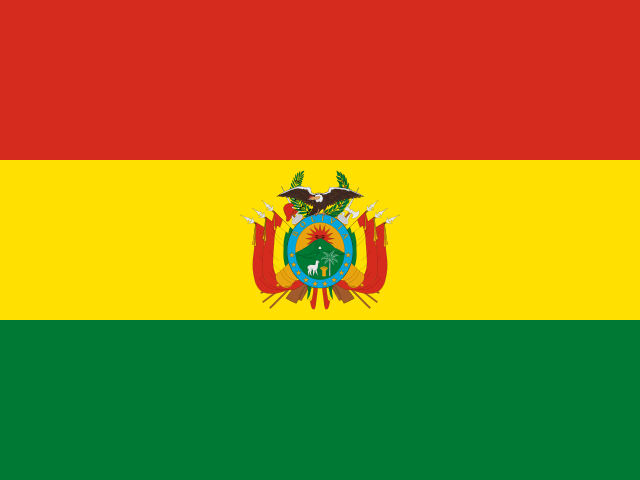 Bolivia
 is one of the lowest-cost countries in South America and among the most dramatic to look at, with the Uyuni salt flats, Lake Titicaca and the Altiplano. Altitude dominates the experience: the highland cities are very high, and acclimatising is a real health consideration. Internet is inconsistent, so check each rental. Build in flexibility, because political protests and roadblocks periodically disrupt travel. Petty theft and scams are the usual day-to-day concerns, and counterfeit notes sometimes turn up in change at markets. There is no dedicated nomad visa. The dry season runs from May to October.
Nomad quick facts
$900/mo
$1440/mo
73.7 Mbps
2.054 (#119 of 190)
Moderate
May–Oct
Not available
68.4 / 100
Score breakdown
Very low cost of living, dramatic landscapes, few tourists, mild-climate bases in Sucre and Cochabamba.
Altitude sickness risk, inconsistent internet, protests and roadblocks, limited modern infrastructure, no nomad visa.
Cost of living in Bolivia
Bolivia is one of South America's more affordable destinations, with low costs for accommodation, food and local transport. Cochabamba and Sucre offer relatively mild climates and comfortable day-to-day living, while La Paz provides a more energetic urban experience at higher altitude. Local restaurants and longer-term rentals can keep costs particularly low.
Estimated monthly cost
Single
$900/mo
Couple
$1,440/mo
Cost score inputs
Livingcost
91/100
WB PLI
39.1
Score blends a nomad-realistic monthly cost estimate (built from livingcost.org data, adjusted for short-term nomad spending like furnished housing, coworking, and eating out) with the World Bank's Household Consumption Price Level Index, a broader cross-country cost benchmark. Countries without World Bank price-level data are scored on the livingcost estimate alone. Prices displayed in USD.
The nomad cost estimate reflects a realistic single/couple monthly budget, not a bare local cost of living — actual spending still varies with lifestyle and location within a country.
Sources: livingcost.org · World Bank Household Consumption Price Level Index · Independent nomad cost estimates
Internet in Bolivia
Bolivia supplies basic internet performance suitable for casual work tasks, though modest upload throughput and higher latency require extra time for large file transfers.
Download speed
73.7 Mbps
Upload speed
42.5 Mbps
Latency
51.3 ms
Blends download speed (Ookla Speedtest Global Index) with upload speed and latency (Cloudflare Radar). Speeds are scored between 10 Mbps (0) and 200 Mbps (100); latency counts the opposite way — lower is better. A missing metric doesn't penalize a country, it's scored on whatever data is available.
A national average — city and neighbourhood speeds vary, especially outside major hubs.
Get an eSIM for arrival →Sources: Ookla Speedtest Global Index · Cloudflare Radar
Safety in Bolivia
Bolivia is moderately safe, with petty theft and scams the main day-to-day concern in La Paz and Santa Cruz; periodic roadblocks and civil unrest can disrupt travel plans more than crime affects personal safety.
Global safety rank
#119 of 190
Peace Index score
2.054 (lower = safer)
WJP Rule of Law rank
#120 of 143
WJP Rule of Law score
0.6 (higher = safer)
Gallup Law & Order rank
#105 of 119
Gallup Law & Order score
63 (higher = safer)
Blends three published safety indices: the Global Peace Index, the WJP Rule of Law Index (Order & Security factor), and the Gallup Global Law and Order Index. Places the Global Peace Index doesn't cover use our own estimate, based on regional peers and crime data. Each is rescaled 0-100 and combined with weights favoring GPI and Gallup slightly over WJP. Not every country is tracked by all three — the blend adjusts to whichever are available (weights are renormalized) rather than penalizing a country for a missing source, though a country tracked by fewer sources carries lower confidence.
As this is national average data, be aware that safety varies significantly by city and region within a country.
Get nomad insurance →Sources: Global Peace Index (Institute for Economics & Peace) · WJP Rule of Law Index (World Justice Project) · Gallup Global Law and Order Index
Tourism & infrastructure in Bolivia
Bolivia packs the otherworldly Uyuni salt flats, Lake Titicaca, and the Altiplano into the cheapest country in South America, with milder, colonial Sucre offering a gentler base than high-altitude La Paz. Altitude genuinely shapes the experience here, so acclimatization is a real consideration before diving into sightseeing.
Happiness rank
#78 of 147
Tourism development rank
#99 of 119
Within-city transit
Moderate
Between-city transit
Moderate
Ranges from the cool high Andes (Altiplano) to tropical lowlands; dry winter and wetter summer.
Best months: May–Oct
Bolivia's standout is La Paz, linked to El Alto by Mi Teleférico, the world's largest urban cable-car network, which glides over the steep terrain. Otherwise transit means crowded minibuses, micros and shared taxis. Intercity travel relies on buses of varying comfort over Andean roads, plus some flights. City centres are walkable, but altitude and hills are challenging.
A weighted blend of published indices: the World Economic Forum's Travel & Tourism Development Index (weighted highest — the strongest predictor of appeal), Numbeo's Quality of Life Index, the World Happiness Report, Gallup's day-to-day enjoyment data, the EF English Proficiency Index, and a public transit assessment covering both within-city and between-city transport. Not every country is scored on all six — the blend adjusts to whichever are available rather than penalizing a country for a missing one.
Sources: WEF Travel & Tourism Development Index · Numbeo Quality of Life Index · World Happiness Report · Gallup · EF English Proficiency Index · Public transit assessment
Bolivia visa and entry rules for digital nomads
Tourist entry — USA passport
Visa-free — 90 days
Tourism Visa Note
Even though visa-free, proof of onward/return travel is commonly requested by both the airline at check-in and immigration on arrival — don't rely on a one-way ticket alone. If you're arriving from (or transiting more than 12 hours through) a yellow-fever-risk country, you may also be asked for a yellow fever vaccination certificate, even though it's not required for travelers arriving directly from Canada/USA/UK/EU.
Working remotely in Bolivia on tourist entry
Work of any kind, including remote work, is permitted only with a standard work visa, according to EY's July 2026 global guide. Source
In practice
No reports of enforcement against remote workers found (checked October 2026).
Border runs and re-entry
Officers issue 30-day stamps, but the full stay is allowed without a new stamp. The allowance is counted across a one-year period. Source
Digital nomad visa
No dedicated digital-nomad route
Other long-stay options
Yes (for specific purposes, such as work)
Visa and entry requirements can change. Check the latest information from official government sources before travelling; eligibility, documents and permitted activities depend on your nationality and personal circumstances.
Tax & residency in Bolivia
Tax-residency timing
No fixed personal tax-residency day threshold identified; individual income tax is source-based regardless of residence
How the day count works
No general day-count test identified for personal income tax; tax exposure follows the source of income and activity performed in Bolivia.
Other residency triggers
No separate non-day individual tax-residency trigger identified; income from activities carried out in Bolivia is Bolivian-source.
Remote work before residence
Usually taxable. Work carried out in Bolivia is Bolivian-source even when the worker is non-domiciled and paid by a foreign entity; foreign-payer cases can require direct filing.
If you become tax resident
Bolivia taxes individuals on Bolivian-source income regardless of residence; foreign-source individual income is generally outside the personal income-tax base.
What this usually means for nomads
Bolivia’s personal income tax is based on income source rather than a fixed day threshold. Work performed in Bolivia can be taxed even when a foreign employer pays the worker. Local workdays and Bolivian-source business activity create the clearest exposure.
Tax rules can change and depend on your residency status, income structure, time spent in the country and applicable tax treaties. This information is general only and is not financial or tax advice. Consult a qualified tax professional before relying on it.
Top cities for nomads in Bolivia
Sucre is the gentler base: a white colonial city with a mild climate, low costs and many Spanish schools. La Paz is intense and very high, Cochabamba has the best climate and a strong food scene, and Santa Cruz is a warm lowland business city.
Largest city; modern, warm lowland business hub, growing expat community.
Seat of government; dramatic high-altitude setting & culture; 3,600m elevation is tough.
City of Eternal Spring'; best climate, famous food scene, relaxed, low CoL.
Constitutional capital; white colonial old town, mild climate, cheap & laid-back.
 Nicaragua
 Guatemala
 Honduras