Oceania · Australasia
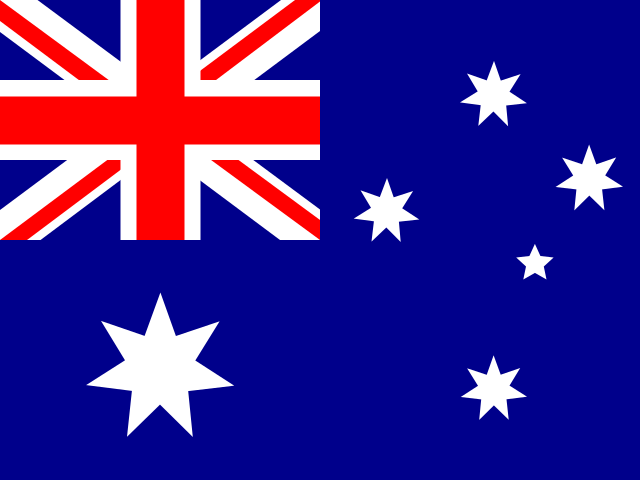 Australia
 offers an excellent outdoor lifestyle, safe cities and strong amenities. Two things dominate the decision: it is expensive, and it is far from everywhere, so short trips abroad are not practical and long-haul flights are the norm. There is no digital nomad visa; the Working Holiday visa is the practical long-stay route for those who meet its age limit. The seasons are reversed from the northern hemisphere, the sun is strong, and the best time depends on the region, with the tropical north at its best in the dry season from April to September. Bushfires and extreme heat are the main environmental risks.
Nomad quick facts
$3080/mo
$4930/mo
162.3 Mbps
1.602 (#28 of 190)
Strong
Sep–May (S), Apr–Sep (N)
Not available
73.2 / 100
Score breakdown
Very safe, outdoor lifestyle and beaches, strong city amenities and culture, English-speaking.
High cost of living, far from other countries, no nomad visa, bushfire and extreme-heat risk.
Cost of living in Australia
Australia is expensive, with housing and everyday services driving much of the cost in major cities. Sydney and Melbourne are particularly costly, while regional cities such as Newcastle and Geelong can offer better value without giving up access to modern amenities. Cooking at home and choosing longer-term accommodation make a significant difference to the overall budget.
Estimated monthly cost
Single
$3,080/mo
Couple
$4,930/mo
Cost score inputs
Livingcost
46/100
WB PLI
94.8
Score blends a nomad-realistic monthly cost estimate (built from livingcost.org data, adjusted for short-term nomad spending like furnished housing, coworking, and eating out) with the World Bank's Household Consumption Price Level Index, a broader cross-country cost benchmark. Countries without World Bank price-level data are scored on the livingcost estimate alone. Prices displayed in USD.
The nomad cost estimate reflects a realistic single/couple monthly budget, not a bare local cost of living — actual spending still varies with lifestyle and location within a country.
Sources: livingcost.org · World Bank Household Consumption Price Level Index · Independent nomad cost estimates
Internet in Australia
Australia provides fast download speeds across major cities, though upload bandwidth and international response latency are impacted by geographic distances to overseas servers.
Download speed
162.3 Mbps
Upload speed
37.8 Mbps
Latency
37.9 ms
Blends download speed (Ookla Speedtest Global Index) with upload speed and latency (Cloudflare Radar). Speeds are scored between 10 Mbps (0) and 200 Mbps (100); latency counts the opposite way — lower is better. A missing metric doesn't penalize a country, it's scored on whatever data is available.
A national average — city and neighbourhood speeds vary, especially outside major hubs.
Get an eSIM for arrival →Sources: Ookla Speedtest Global Index · Cloudflare Radar
Safety in Australia
Australia is very safe from a crime perspective, with low violent crime and strong rule of law; the more relevant risks for nomads are environmental, including bushfires, extreme heat and wildlife, rather than personal safety.
Global safety rank
#28 of 190
Peace Index score
1.602 (lower = safer)
WJP Rule of Law rank
#25 of 143
WJP Rule of Law score
0.87 (higher = safer)
Gallup Law & Order rank
#49 of 119
Gallup Law & Order score
80 (higher = safer)
Blends three published safety indices: the Global Peace Index, the WJP Rule of Law Index (Order & Security factor), and the Gallup Global Law and Order Index. Places the Global Peace Index doesn't cover use our own estimate, based on regional peers and crime data. Each is rescaled 0-100 and combined with weights favoring GPI and Gallup slightly over WJP. Not every country is tracked by all three — the blend adjusts to whichever are available (weights are renormalized) rather than penalizing a country for a missing source, though a country tracked by fewer sources carries lower confidence.
As this is national average data, be aware that safety varies significantly by city and region within a country.
Get nomad insurance →Sources: Global Peace Index (Institute for Economics & Peace) · WJP Rule of Law Index (World Justice Project) · Gallup Global Law and Order Index
Tourism & infrastructure in Australia
Melbourne's arts and coffee culture makes it the country's nomad favorite, while Brisbane and Adelaide offer better value for a similar outdoor lifestyle. Australia's real catch is distance — it's genuinely far from everywhere, so day trips mean beaches and nature nearby rather than hopping to another country.
Happiness rank
#15 of 147
Quality of life rank
#14 of 89
Tourism development rank
#4 of 119
Within-city transit
Strong
Between-city transit
Limited
Ranges from tropical north to temperate south and arid interior; seasons reversed.
Best months: Sep–May (S), Apr–Sep (N)
Australia's transit is strong within its major cities: Sydney has trains, light rail, buses and ferries, Melbourne runs the world's largest tram network, and Brisbane and Perth have solid systems, all using tap cards (Opal, Myki). Suburbs remain car-dependent, and the vast distances between cities mean intercity travel is almost entirely by plane, as rail is scenic but slow. City centres are walkable.
A weighted blend of published indices: the World Economic Forum's Travel & Tourism Development Index (weighted highest — the strongest predictor of appeal), Numbeo's Quality of Life Index, the World Happiness Report, Gallup's day-to-day enjoyment data, the EF English Proficiency Index, and a public transit assessment covering both within-city and between-city transport. Not every country is scored on all six — the blend adjusts to whichever are available rather than penalizing a country for a missing one.
Sources: WEF Travel & Tourism Development Index · Numbeo Quality of Life Index · World Happiness Report · Gallup · EF English Proficiency Index · Public transit assessment
Australia visa and entry rules for digital nomads
Tourist entry — USA passport
ETA required — 90 days
Tourism Visa Note
ETA (subclass 601) — AUD $20 online service fee, applied via the official Australian ETA app, valid 12 months for multiple entries of up to 3 months each.
Working remotely in Australia on tourist entry
Visitor visas prohibit work in Australia. Home Affairs policy treats online work incidental to a holiday, such as keeping up with a job back home, as not of concern. Source
Border runs and re-entry
Repeat visits are allowed throughout the ETA's 12-month validity. Source
Digital nomad visa
No dedicated digital-nomad route
Other long-stay options
Long-term visas for work, study, and family
Visa and entry requirements can change. Check the latest information from official government sources before travelling; eligibility, documents and permitted activities depend on your nationality and personal circumstances.
Tax & residency in Australia
Tax-residency timing
183 days in an income year under one test; other residency tests can apply with fewer days
How the day count works
The 183-day test totals continuous or intermittent presence during the Australian income year, 1 July to 30 June. Separate resides, domicile and Commonwealth superannuation tests also apply.
Other residency triggers
Ordinary residence based on the overall pattern of life; Australian domicile unless a permanent place of abode is outside Australia; and specified Commonwealth superannuation connections.
Remote work before residence
Usually taxable. A nonresident is generally taxed on Australian-source income, and pay for services physically performed in Australia may have an Australian source even when paid by a foreign employer.
If you become tax resident
Australian tax residents generally declare worldwide income. A temporary resident may receive special treatment for some foreign income, subject to the statutory definition and exceptions.
What this usually means for nomads
A remote worker can become resident under Australia’s facts-based tests even below 183 days; that threshold is only one test. Nonresidents may still owe tax on work physically performed in Australia. An established home, family or lasting personal and work ties increase the risk.
Tax rules can change and depend on your residency status, income structure, time spent in the country and applicable tax treaties. This information is general only and is not financial or tax advice. Consult a qualified tax professional before relying on it.
Top cities for nomads in Australia
Melbourne is the arts and coffee capital and the nomad favourite, and Sydney is the largest and most expensive city. Brisbane is sunnier, more relaxed and more affordable, and Canberra, the capital, is quiet and spread out.
Arts, coffee & culture capital; Australia's nomad favorite, but pricey.
Largest & most iconic; harbour, beaches, jobs, but priciest CoL.
Relaxed & more affordable; sunny subtropical climate, growing scene.
Capital; planned, safe, high incomes & QoL, but quiet & spread-out (weaker nomad base).
 United Kingdom
 Netherlands
 Norway