Africa · Sub-Saharan
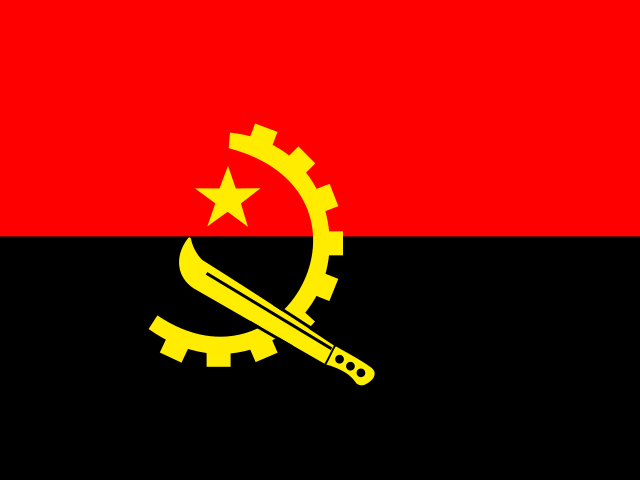 Angola
 has been stable for more than two decades, but for outsiders it is defined by cost. Luanda is expensive for secure housing and imported goods, though prices ease in local neighbourhoods and markets. Portuguese is essential day to day, and English is rare. Bureaucracy is heavy, internet is weak and tourism infrastructure outside the capital is thin. The capital is manageable with normal city caution. It rewards travellers willing to go slowly and pay for logistics, in the dry season from May to September.
Nomad quick facts
$2540/mo
$4060/mo
22.1 Mbps
1.955 (#102 of 190)
Limited
May–Sep
Not available
51.4 / 100
Score breakdown
Dramatic waterfalls and coastline, music and coastal culture, few tourists.
High costs in Luanda, heavy bureaucracy, Portuguese required, weak internet, basic infrastructure outside cities.
Cost of living in Angola
Angola is relatively expensive by regional standards, particularly in Luanda, where secure accommodation and imported goods carry significant premiums. Living costs drop outside the capital's most desirable areas, but housing and everyday services can still be costly. Local food and markets offer better value than the expatriate-oriented side of the economy.
Estimated monthly cost
Single
$2,540/mo
Couple
$4,060/mo
Cost score inputs
Livingcost
90/100
WB PLI
34.4
Score blends a nomad-realistic monthly cost estimate (built from livingcost.org data, adjusted for short-term nomad spending like furnished housing, coworking, and eating out) with the World Bank's Household Consumption Price Level Index, a broader cross-country cost benchmark. Countries without World Bank price-level data are scored on the livingcost estimate alone. Prices displayed in USD.
The nomad cost estimate reflects a realistic single/couple monthly budget, not a bare local cost of living — actual spending still varies with lifestyle and location within a country.
Sources: livingcost.org · World Bank Household Consumption Price Level Index · Independent nomad cost estimates
Internet in Angola
Angola has modest download speeds, but Cloudflare Radar data is missing for upload and latency; Luanda has by far the strongest internet infrastructure, while connections can be less reliable outside major cities.
Download speed
22.1 Mbps
Upload speed
12.8 Mbps
Latency
84.7 ms
Blends download speed (Ookla Speedtest Global Index) with upload speed and latency (Cloudflare Radar). Speeds are scored between 10 Mbps (0) and 200 Mbps (100); latency counts the opposite way — lower is better. A missing metric doesn't penalize a country, it's scored on whatever data is available.
A national average — city and neighbourhood speeds vary, especially outside major hubs.
Get an eSIM for arrival →Sources: Ookla Speedtest Global Index · Cloudflare Radar
Safety in Angola
Angola is generally manageable for visitors in Luanda with standard city-level caution, though it remains lightly touristed by nomads and infrastructure for long-stay foreign visitors is less developed than in more established African destinations.
Global safety rank
#102 of 190
Peace Index score
1.955 (lower = safer)
WJP Rule of Law rank
#125 of 143
WJP Rule of Law score
0.58 (higher = safer)
Blends three published safety indices: the Global Peace Index, the WJP Rule of Law Index (Order & Security factor), and the Gallup Global Law and Order Index. Places the Global Peace Index doesn't cover use our own estimate, based on regional peers and crime data. Each is rescaled 0-100 and combined with weights favoring GPI and Gallup slightly over WJP. Not every country is tracked by all three — the blend adjusts to whichever are available (weights are renormalized) rather than penalizing a country for a missing source, though a country tracked by fewer sources carries lower confidence.
As this is national average data, be aware that safety varies significantly by city and region within a country.
Get nomad insurance →Sources: Global Peace Index (Institute for Economics & Peace) · WJP Rule of Law Index (World Justice Project) · Gallup Global Law and Order Index
Tourism & infrastructure in Angola
Kalandula Falls and the Namibe desert's ancient welwitschia plants offer genuinely under-visited natural drama, though Luanda has spent years ranked among the world's most expensive cities for expats. This is an adventurous, costly destination rather than a nomad base, with tourism infrastructure still thin.
Tourism development rank
#114 of 119
English Proficiency Index
413.0 (93 out of 106)
Within-city transit
Limited
Between-city transit
Limited
Semi-arid to tropical; hot with a wet season Oct–Apr and a cooler, dry season.
Best months: May–Sep
Angola's transit is dominated by 'candongueiro' blue-and-white minibuses in Luanda, cheap but crowded and informal, plus a limited public bus service (TCUL) and a suburban railway. Intercity travel uses coaches and three regional railway lines, though roads and services vary. Luanda is congested and expensive; walkability is limited, and taxis or hired cars are common.
A weighted blend of published indices: the World Economic Forum's Travel & Tourism Development Index (weighted highest — the strongest predictor of appeal), Numbeo's Quality of Life Index, the World Happiness Report, Gallup's day-to-day enjoyment data, the EF English Proficiency Index, and a public transit assessment covering both within-city and between-city transport. Not every country is scored on all six — the blend adjusts to whichever are available rather than penalizing a country for a missing one.
Sources: WEF Travel & Tourism Development Index · Numbeo Quality of Life Index · World Happiness Report · Gallup · EF English Proficiency Index · Public transit assessment
Angola visa and entry rules for digital nomads
Tourist entry — USA passport
Visa-free — 30 days
Tourism Visa Note
Visa-free for tourism, 30 days per entry, max 90 days per calendar year — no visa or fee to pay under this exemption. (Angola's older visa-on-arrival system for other nationalities is a separate, unrelated route.)
Working remotely in Angola on tourist entry
Work of any kind, including remote work, is permitted only with a standard work visa, according to EY's July 2026 global guide. Source
Digital nomad visa
No dedicated digital-nomad route
Visa and entry requirements can change. Check the latest information from official government sources before travelling; eligibility, documents and permitted activities depend on your nationality and personal circumstances.
Tax & residency in Angola
Tax-residency timing
More than 90 days in a fiscal year; habitual residence on 31 December may also establish residence
How the day count works
More than 90 days, consecutive or not, during the fiscal year; annual residence is assessed at fiscal year-end
Other residency triggers
Habitual residence in Angola on 31 December; other statutory conditions may apply
Remote work before residence
Usually taxable. Remuneration for services performed in Angola is subject to personal income tax regardless of nationality or residence status
If you become tax resident
Residents are generally taxable on Angola-source income; individuals' employment income is taxed under source and category rules rather than a simple worldwide-income basis
What this usually means for nomads
A stay over 90 days or habitual residence at year-end can create residence. Remuneration for work performed in Angola may be taxable even before that point. Local work, a habitual home or a longer stay increases exposure; current classification and withholding rules matter.
Tax rules can change and depend on your residency status, income structure, time spent in the country and applicable tax treaties. This information is general only and is not financial or tax advice. Consult a qualified tax professional before relying on it.
Top cities for nomads in Angola
Luanda is the oil-boom capital on the coast, with a waterfront and nightlife. Benguela and Lobito are twin coastal cities with beaches, Lubango is a cooler highland city, and Kalandula Falls is one of Africa's largest waterfalls.
Capital & largest; an oil-boom coastal city with a waterfront Marginal & buzzing nightlife; notoriously expensive.
Twin central-coast cities of palm-lined beaches, colonial architecture & the Benguela railway.
A cooler southern-highland city near the dramatic Tundavala Gap & Serra da Leba pass.
One of Africa's largest waterfalls; a thundering curtain in the northern interior.
 Lebanon
 Congo
 Djibouti